Understanding the Role of Nutrient Enrichment in Modern Food Systems
???? Introduction
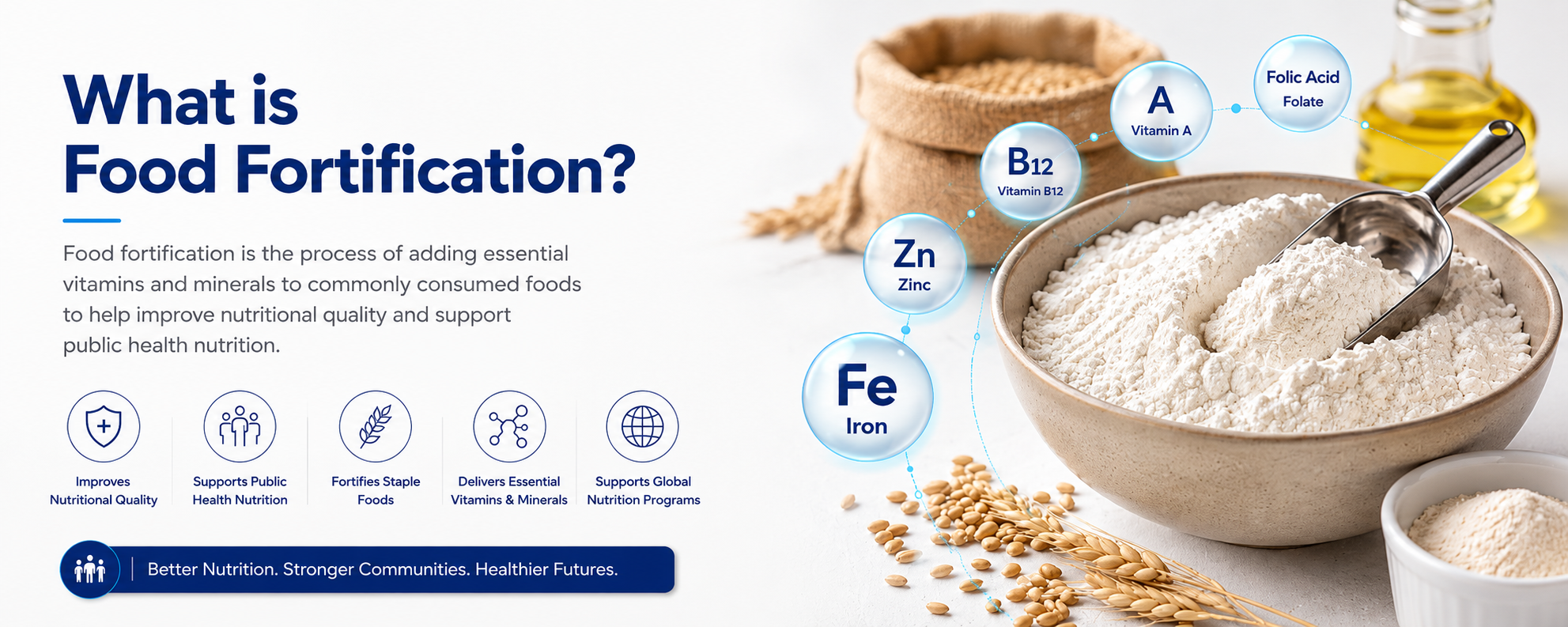
Food fortification is the process of adding essential vitamins and minerals to food products to help improve nutritional quality and support public health nutrition.
Fortification is widely used across global food systems to address micronutrient deficiencies and improve nutrient intake through commonly consumed foods such as:
- Wheat flour
- Rice
- Cereals
- Milk products
- Salt
- Nutritional products
Among various micronutrients, iron is one of the most important nutrients used in food fortification programs due to the widespread prevalence of iron deficiency worldwide.
???? Why Food Fortification Matters
Micronutrient deficiencies can affect nutritional well-being across different populations and age groups.
Food fortification helps support improved nutrient intake by incorporating essential micronutrients into staple foods that are regularly consumed within a population.
Fortification programs are commonly implemented to support:
- Public health nutrition initiatives
- Staple food enrichment
- Nutritional improvement programs
- Preventive nutrition strategies
- Large-scale population nutrition systems
Because fortified foods are integrated into regular diets, food fortification is considered one of the most practical approaches for improving micronutrient accessibility.
???? What Nutrients Are Commonly Used in Food Fortification?
Food fortification systems may include nutrients such as:
- Iron
- Folic acid
- Zinc
- Vitamin A
- Vitamin D
- Vitamin B12
- Other vitamins and minerals
The selection of nutrients depends on:
- Nutritional objectives
- Regional dietary patterns
- Regulatory guidelines
- Target population needs
- Product application requirements
???? Why Iron is Commonly Used in Fortification
Iron plays an important role in nutrition and is one of the most widely used micronutrients in food fortification systems.
Iron fortification is commonly used in:
- Wheat flour fortification
- Cereal fortification
- Nutritional premixes
- Supplement systems
- Fortified food products
The effectiveness of iron fortification depends on several factors, including:
- Iron source selection
- Bioavailability
- Stability in food systems
- Particle characteristics
- Sensory compatibility
- Processing behavior
For this reason, ingredient quality and manufacturing consistency are important considerations in food fortification programs.
???? Common Food Fortification Applications
Food fortification is used across multiple food categories and nutritional systems.
Examples include:
Wheat Flour Fortification
Iron ingredients added to flour used in bread, bakery products, and staple foods.
Breakfast Cereals
Micronutrient-enriched cereal products designed to support nutritional intake.
Nutritional Premixes
Vitamin and mineral blends used in fortified food systems and supplements.
Nutritional Products
Fortified food products developed for specific nutritional applications.
Public Health Nutrition Programs
Large-scale fortification initiatives supporting improved nutrient accessibility.
???? Factors Considered in Food Fortification
Successful fortification systems require careful ingredient evaluation and formulation planning.
Important considerations may include:
- Bioavailability
- Ingredient purity
- Particle size characteristics
- Stability during processing
- Sensory impact
- Storage behavior
- Compatibility with other ingredients
- Regulatory compliance
Different iron ingredients may behave differently depending on food application and processing conditions.
???? Importance of Stability in Fortified Foods
Fortified food systems require ingredients that remain stable during:
- Food processing
- Transportation
- Packaging
- Storage
- Shelf-life conditions
Ingredient stability influences:
- Nutritional consistency
- Product quality
- Sensory behavior
- Long-term formulation performance
For this reason, food-grade iron ingredients are often selected based on both nutritional and processing considerations.
???? Food Fortification and Global Nutrition Programs
Food fortification is widely recognized as an important nutritional strategy across global food systems.
Many countries implement food fortification initiatives involving:
- Staple food enrichment
- Wheat flour fortification
- Nutrition improvement programs
- Micronutrient accessibility strategies
Food manufacturers, premix companies, ingredient suppliers, and nutrition programs all play important roles in supporting fortified food systems.
???? Serena Nutrition Perspective
At Serena Nutrition, we support food fortification systems through the manufacture of high-purity iron powders designed for nutritional applications.
Our focus includes:
- Food-grade iron powders
- Controlled manufacturing systems
- Stable particle characteristics
- Consistent product quality
- Technical and formulation support
We believe ingredient consistency, purity, and stability are essential factors in reliable food fortification systems.
???? Key Takeaways
- Food fortification involves adding nutrients to food products to support improved nutrition
- Iron is one of the most widely used nutrients in food fortification systems
- Fortification is commonly used in wheat flour, cereals, premixes, and nutritional products
- Ingredient quality, stability, and bioavailability are important considerations
- Food fortification supports global nutrition and public health initiatives
- Manufacturing consistency and ingredient selection influence fortified food performance