Iron powder is widely used in chemical and industrial applications where purity, consistency, and controlled reactivity are essential.
In these applications, performance depends not on appearance, but on chemical composition, impurity profile, particle characteristics, and manufacturing process.
Selecting the right iron powder requires an understanding of how it behaves in controlled reactions, how impurities influence outcomes, and how consistency affects reproducibility.
This section explores key considerations for using iron powder in chemical and industrial processes.

Understanding Iron Powders Used in Chemical & Industrial Applications   ???? Introduction Industrial iron powders are specialized iron materials used across a wide range of manufacturing, engineering, chemical, and process-oriented applications. Unlike finished metal components, iron powders are engineered particulate materials designed to support: Controlled processing behavior  Thermal integration  Structural
Read More »

Understanding Process Performance, Stability & Material Behavior   ???? Introduction Iron powders play an important role in modern industrial systems because they support precision manufacturing, controlled processing behavior, material engineering, and large-scale industrial integration. Across many technical industries, iron powders are used in applications requiring: Controlled particle behavior  Stable thermal

Read More »

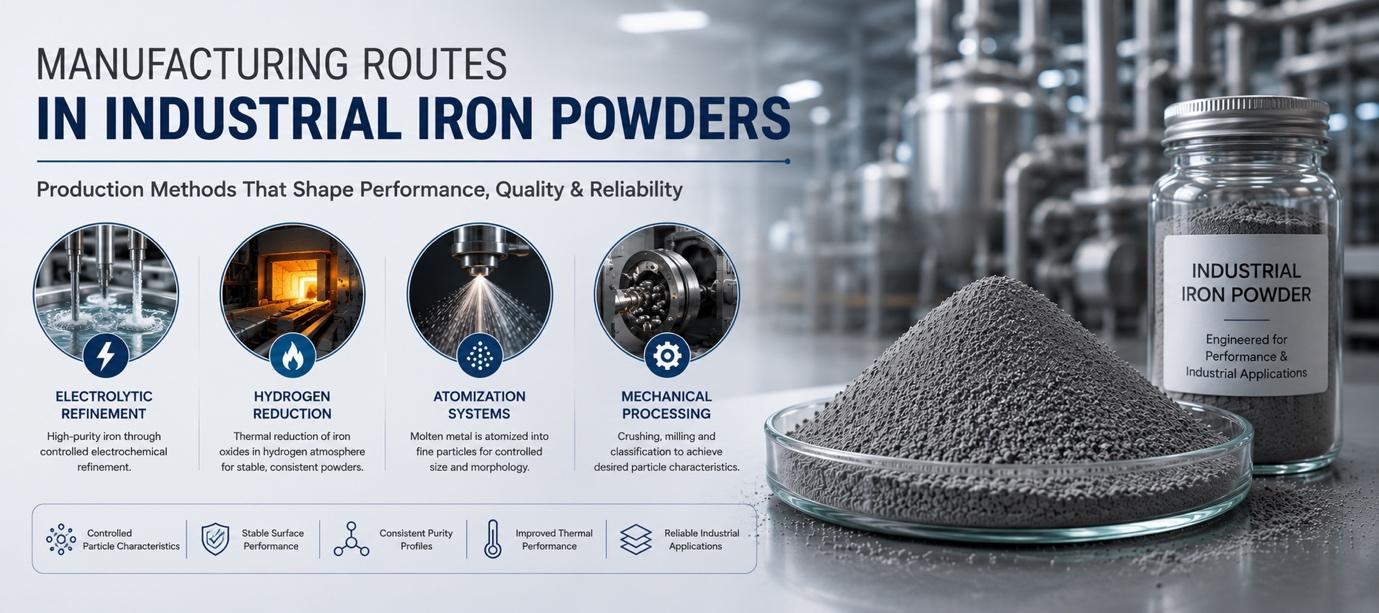
Understanding How Production Methods Influence Industrial Applications   ???? Introduction Industrial iron powders can be manufactured through several production routes, each influencing particle characteristics, purity profiles, surface behavior, and industrial processing performance in different ways. Manufacturing route is one of the most important factors affecting: Particle morphology  Surface stability  Compressibility 

Read More »

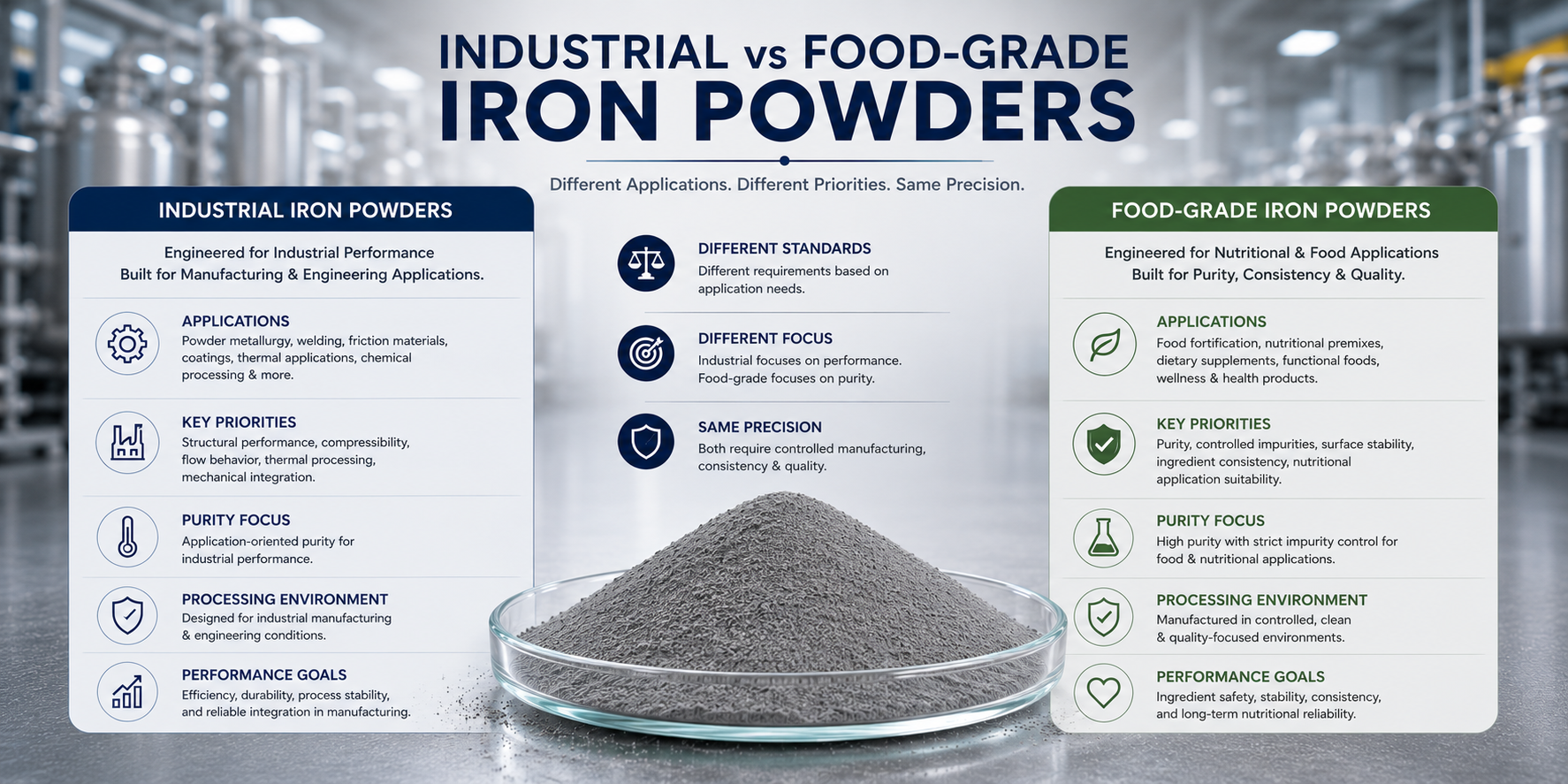
Understanding Differences in Application, Processing & Manufacturing Requirements   ???? Introduction Iron powders are used across a wide range of industrial, nutritional, and specialty applications. However, different applications often require different manufacturing priorities, purity expectations, process controls, and performance characteristics. Industrial iron powders and food-grade iron powders may sometimes appear

Read More »

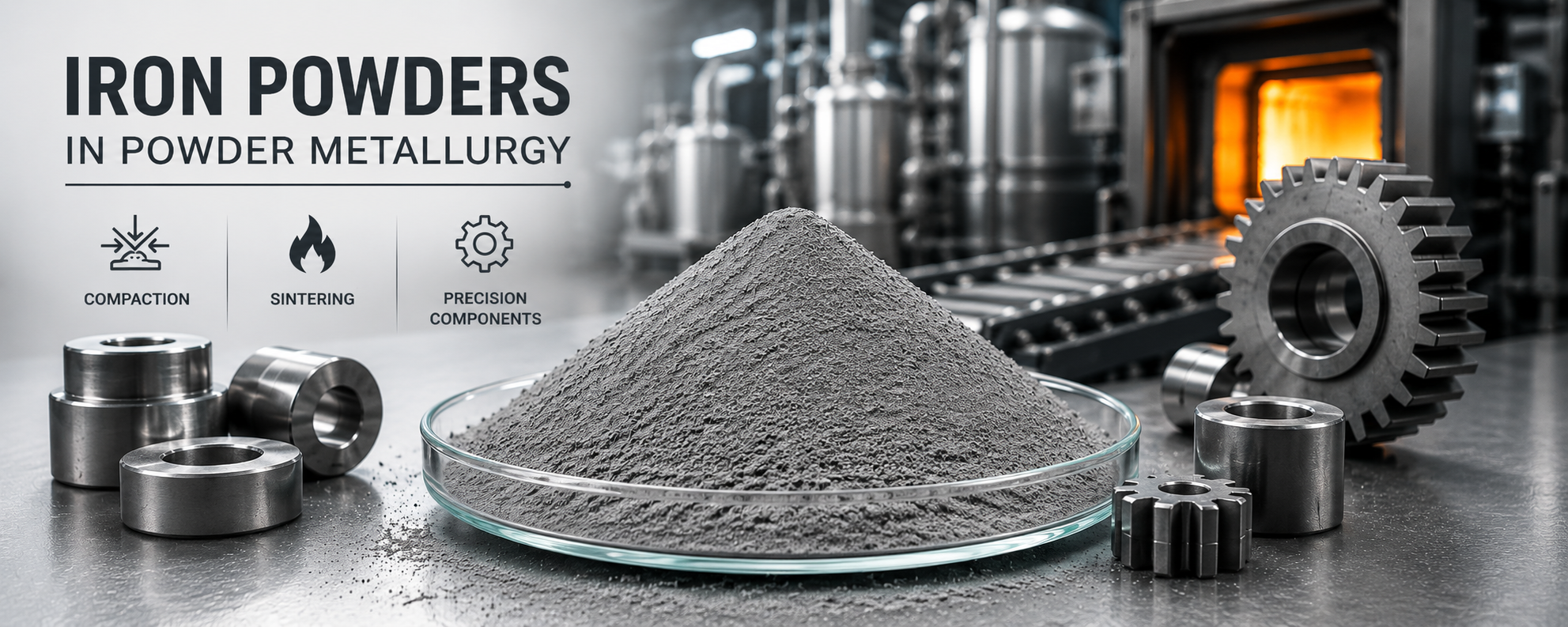
Understanding Sintering, Compaction & Structural Manufacturing Applications   ???? Introduction Powder metallurgy is one of the most important industrial applications of iron powder technology. This manufacturing approach uses engineered metal powders to produce structural and mechanical components through: Compaction  Thermal processing  Sintering integration  Controlled density formation  Iron powders are widely

Read More »

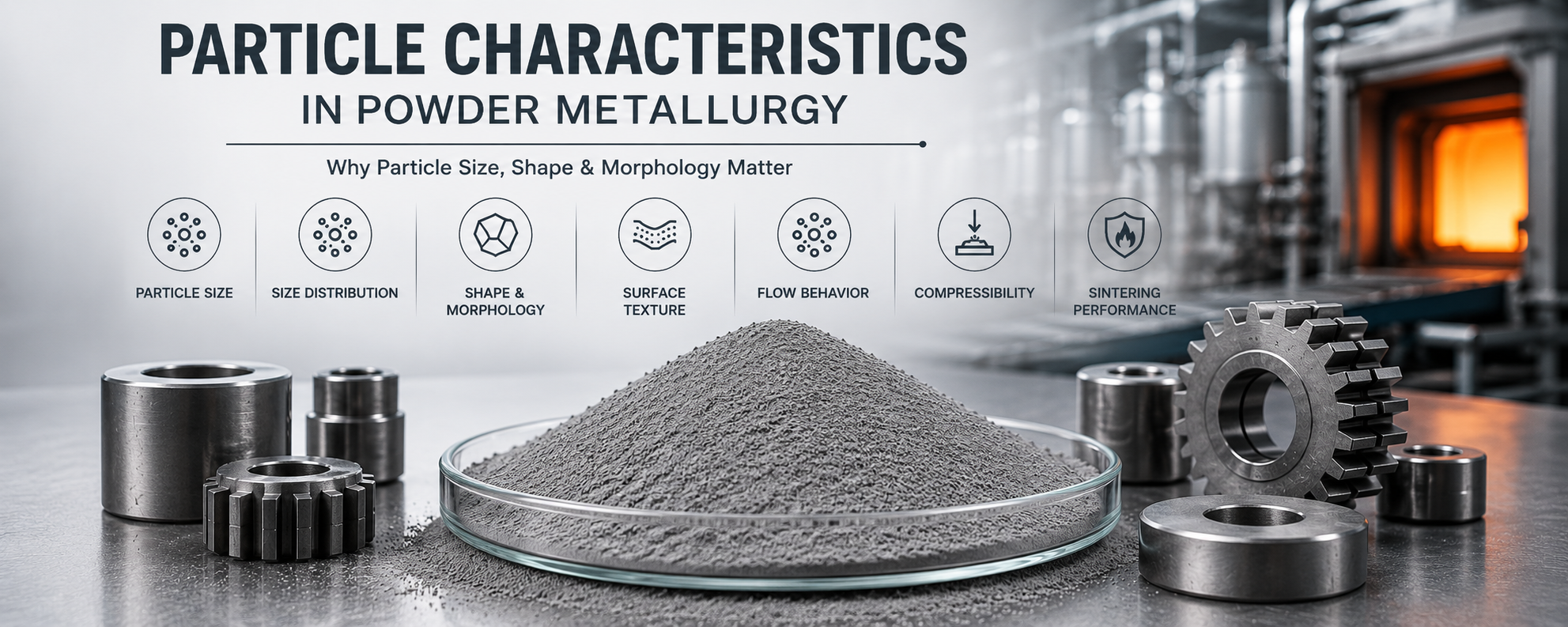
Why Particle Size, Shape & Morphology Matter in Industrial Manufacturing   ???? Introduction Particle characteristics are among the most important factors influencing powder metallurgy performance. In industrial powder systems, particle behavior affects: Compressibility  Flow performance  Packing density  Thermal integration  Sintering response  Structural consistency  Even when iron powders have similar composition,

Read More »

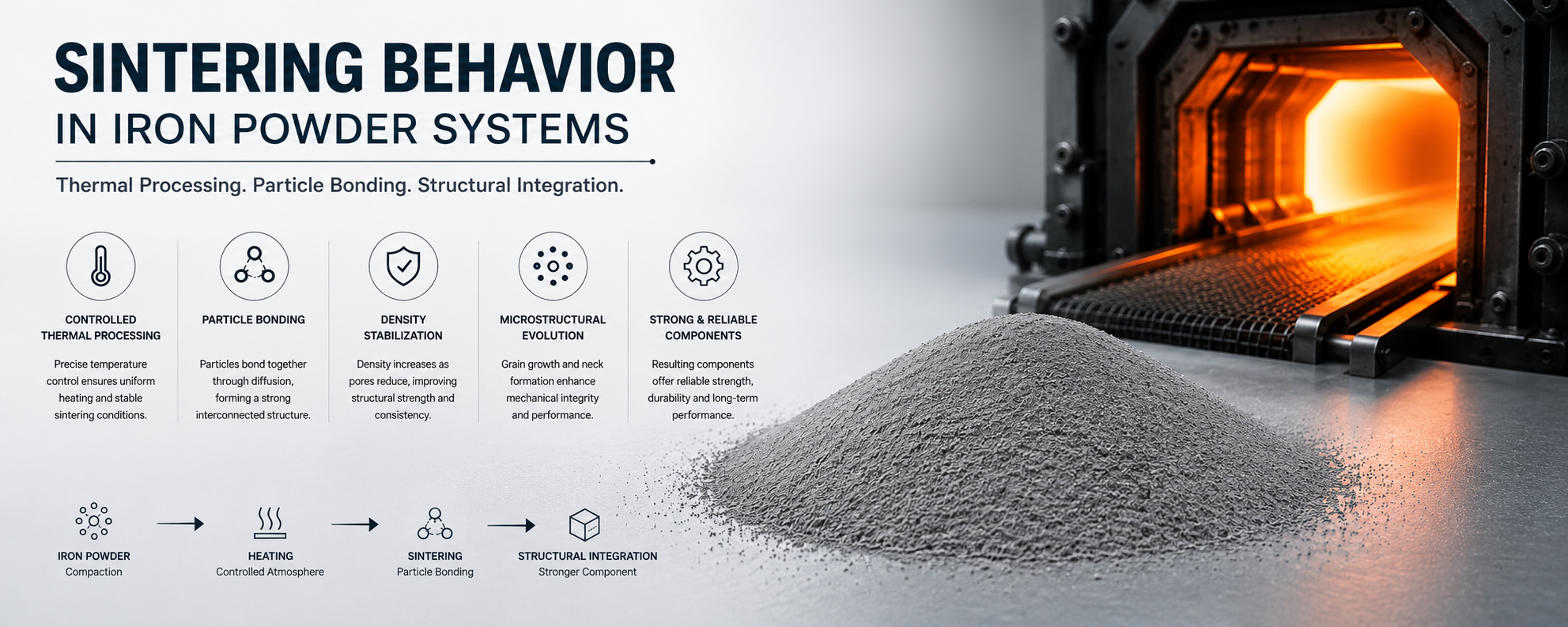
Understanding Thermal Processing, Particle Bonding & Structural Integration   ???? Introduction Sintering is one of the most important stages in powder metallurgy and industrial iron powder processing. During sintering, compacted powder particles are thermally processed under controlled conditions to create: Structural bonding  Density stabilization  Mechanical integration  Solid component formation  The

Read More »

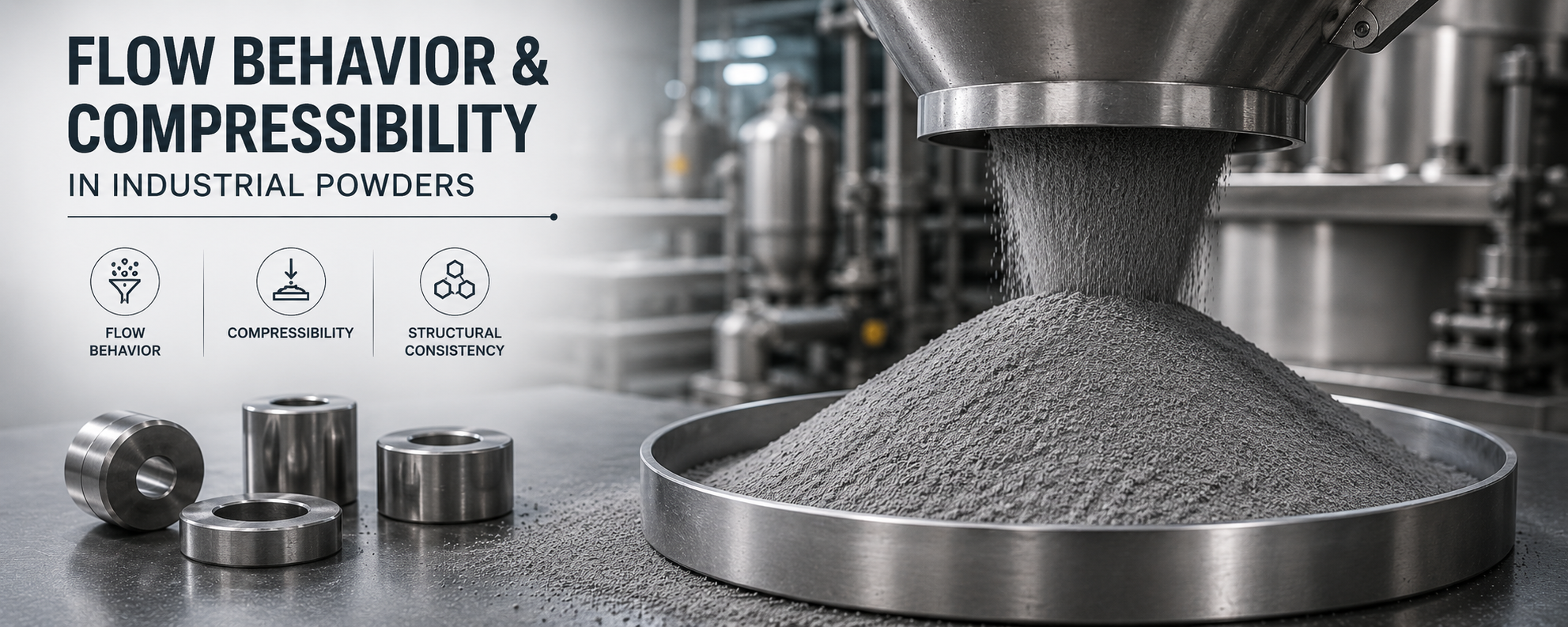
Understanding Manufacturing Efficiency, Powder Handling & Structural Consistency   ???? Introduction Flow behavior and compressibility are two of the most important performance characteristics in industrial powder systems. These properties strongly influence: Powder handling  Feeding consistency  Die filling behavior  Structural compaction  Manufacturing efficiency  Thermal integration  Industrial reproducibility  In powder metallurgy and

Read More »

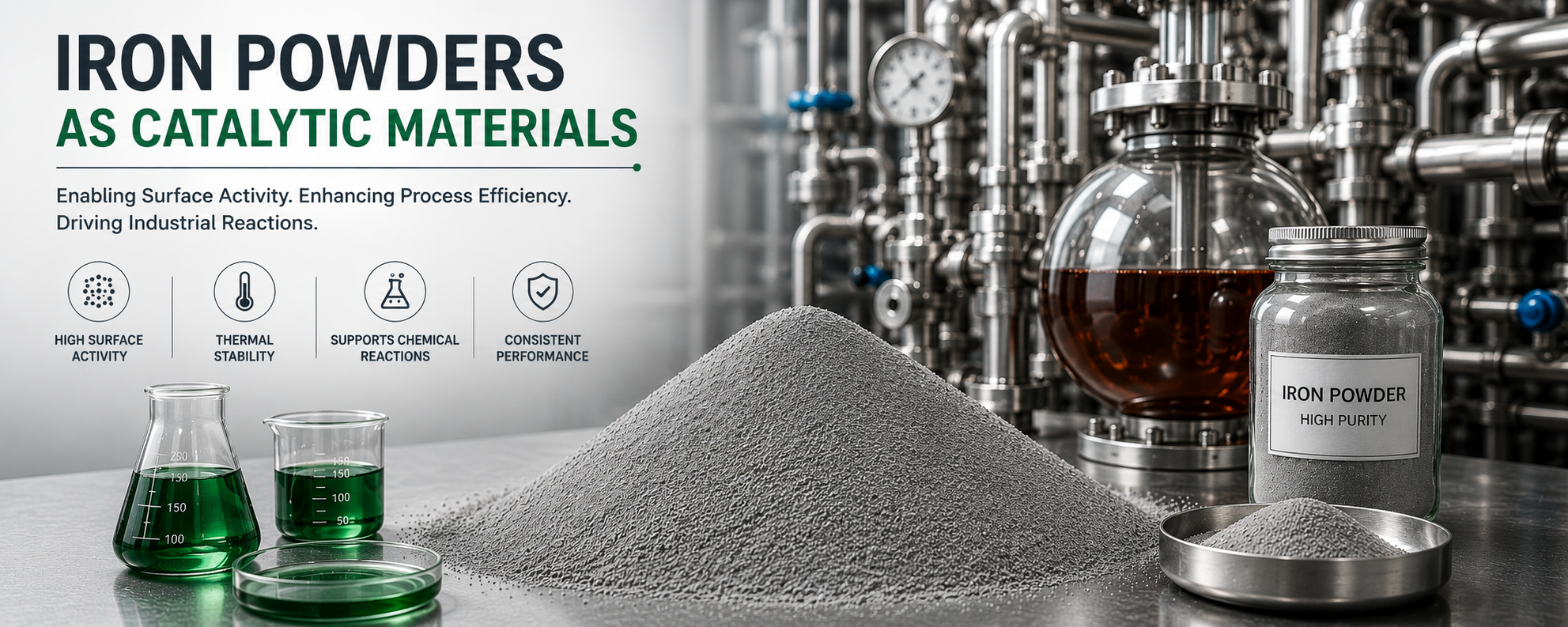
Understanding Surface Activity, Process Interaction & Industrial Reaction Systems   ???? Introduction Iron powders are used in various industrial systems where surface interaction, thermal behavior, and material stability play important roles in process performance. In some industrial applications, iron powders function as catalytic or process-support materials due to their: Surface

Read More »

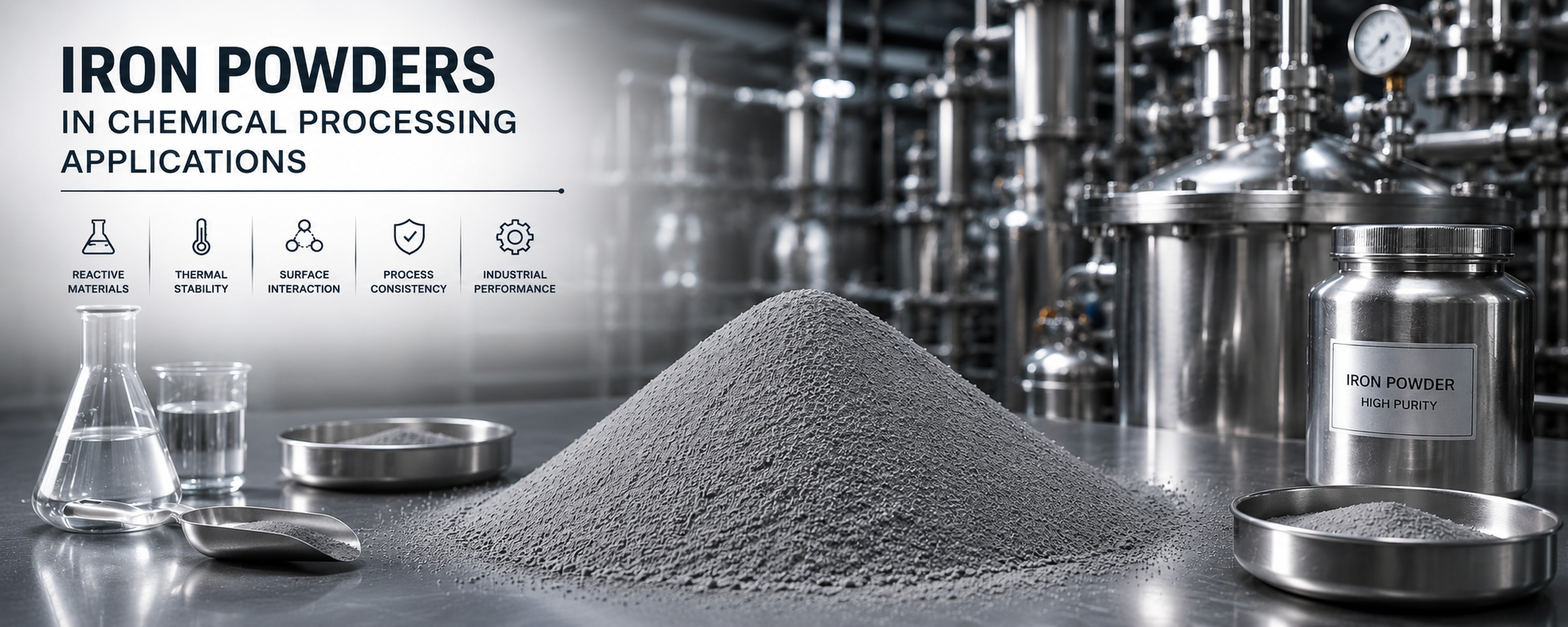
Understanding Reactive Materials, Process Integration & Industrial Performance   ???? Introduction Iron powders are widely used in chemical and process-oriented industrial applications where material behavior, surface interaction, and process stability play important roles. In many industrial systems, iron powders function as: Reactive materials  Process-support materials  Thermal integration components  Surface interaction

Read More »