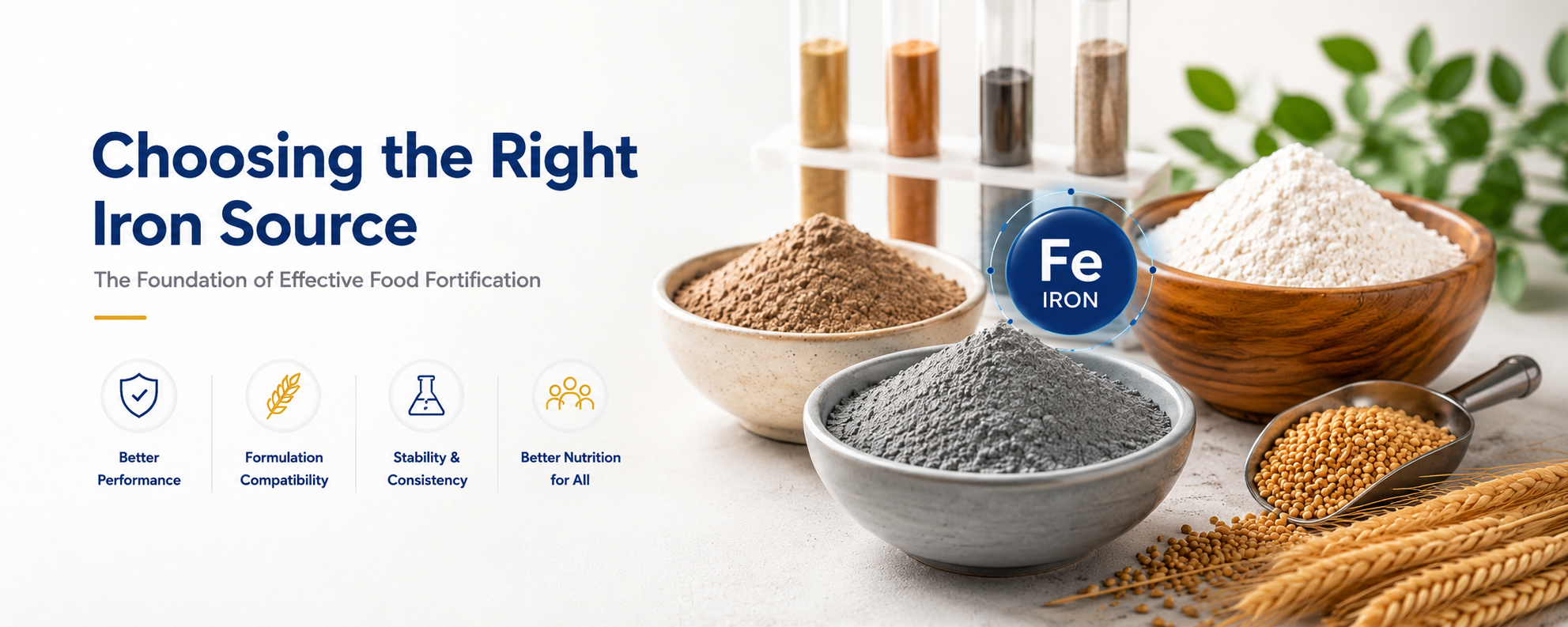
Food fortification is one of the most effective strategies to address iron deficiency at a population level. By enriching staple foods with essential micronutrients, fortification programs help improve nutritional outcomes across diverse regions and communities.
Iron powders play a critical role in these systems, where purity, stability, and consistency are essential for successful implementation. The choice of iron source, manufacturing process, and material characteristics directly influence performance in fortified foods.
This section provides practical insights into iron powder selection, quality considerations, and application challenges in food fortification.

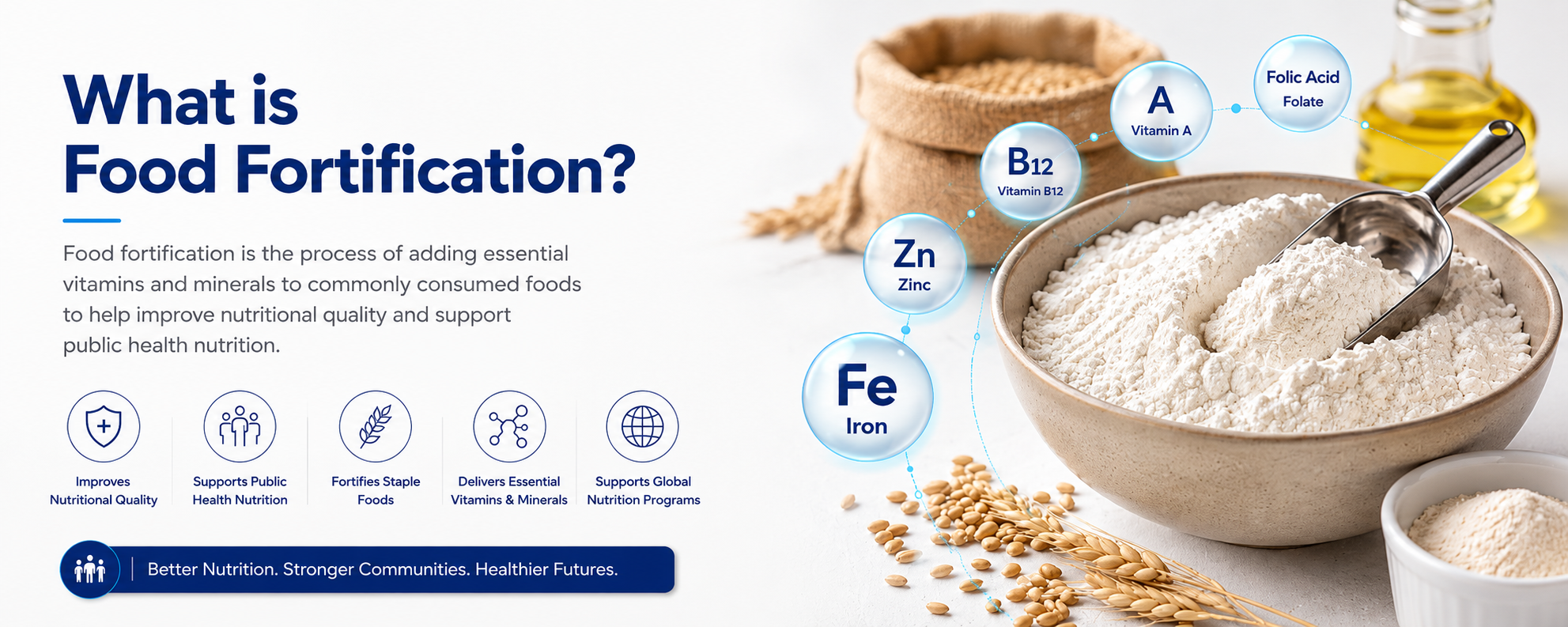
Understanding the Role of Nutrient Enrichment in Modern Food Systems   ???? Introduction Food fortification is the process of adding essential vitamins and minerals to food products to help improve nutritional quality and support public health nutrition. Fortification is widely used across global food systems to address micronutrient deficiencies and
Read More »

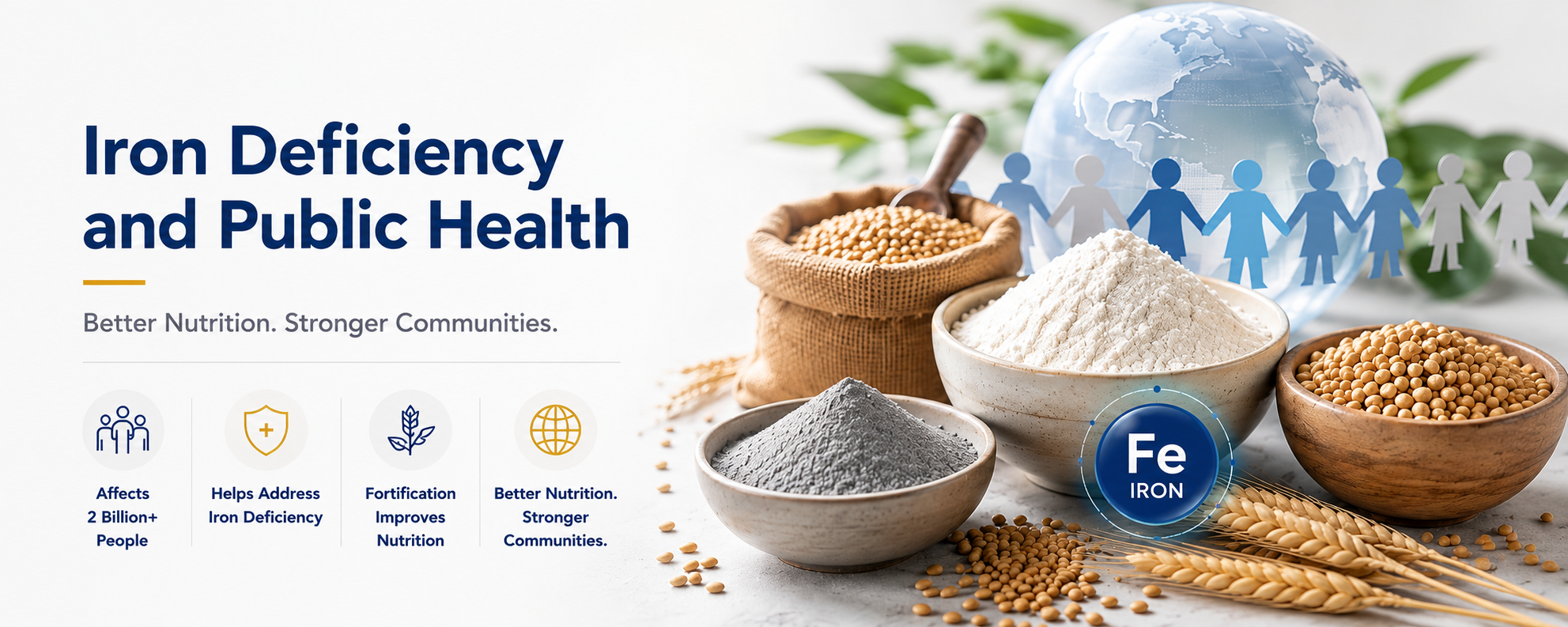
???? Introduction Iron is one of the most important essential minerals required for normal physiological function and nutritional well-being. Despite the availability of food systems across many regions, iron deficiency continues to remain one of the most common micronutrient deficiencies worldwide. For this reason, iron nutrition and food fortification programs

Read More »

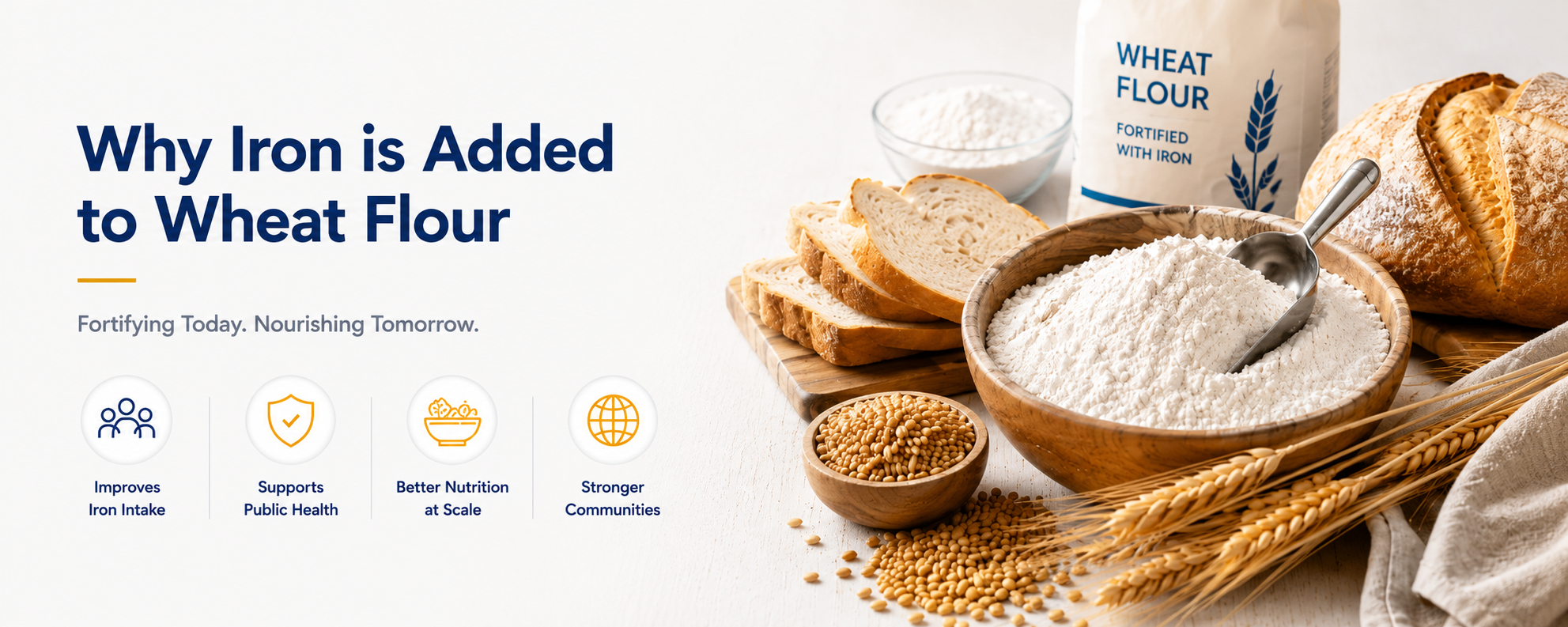
Understanding the Role of Iron Fortification in Staple Food Systems   ???? Introduction Wheat flour is one of the most widely consumed staple food ingredients across many regions of the world. Because flour is used daily in products such as bread, bakery products, noodles, and other staple foods, it is

Read More »

Understanding Ingredient Selection in Fortified Food Systems   ???? Introduction Selecting the appropriate iron source is one of the most important considerations in food fortification systems. Different iron ingredients may behave differently depending on: Food application  Processing conditions  Stability requirements  Sensory considerations  Nutritional objectives  Premix compatibility  For this reason, iron

Read More »

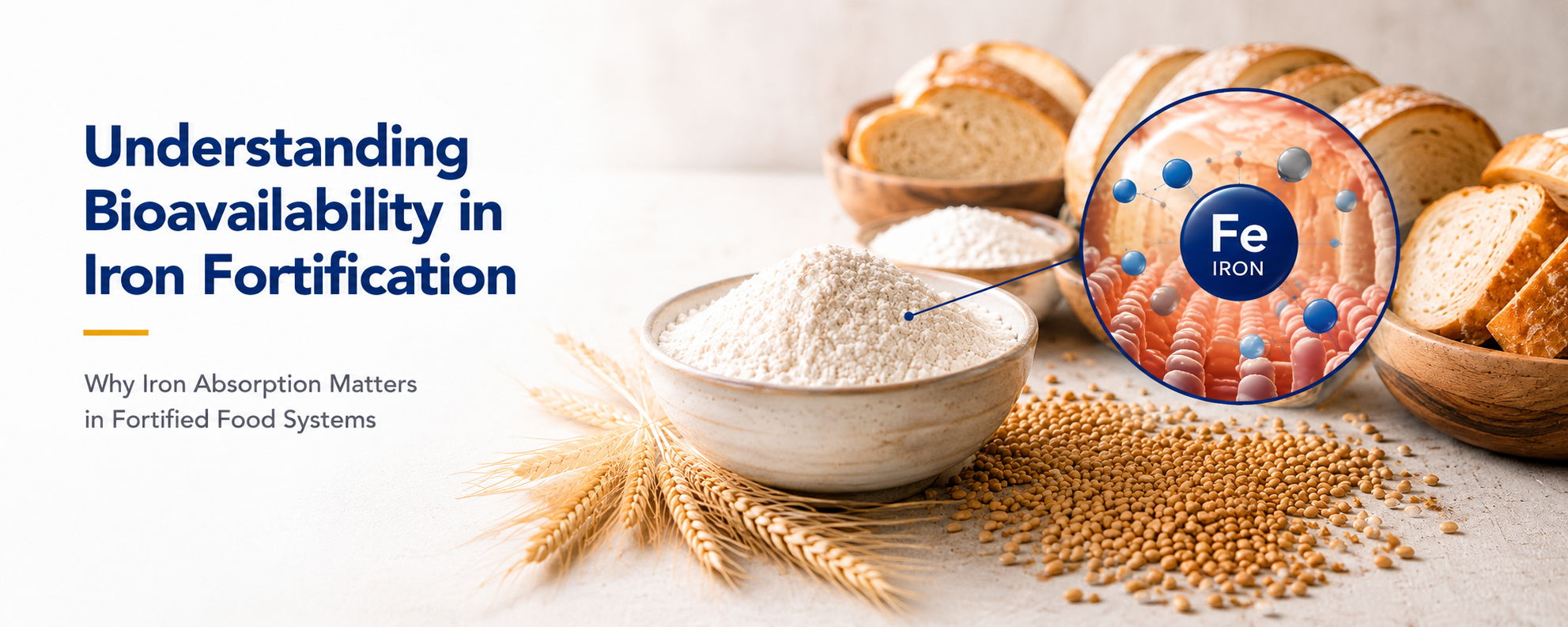
Why Iron Absorption Matters in Fortified Food Systems   ???? Introduction Bioavailability is one of the most important considerations in iron fortification systems. In food fortification, bioavailability refers to how effectively iron may become available for utilization after consumption. Different iron ingredients may behave differently depending on food formulation, processing

Read More »

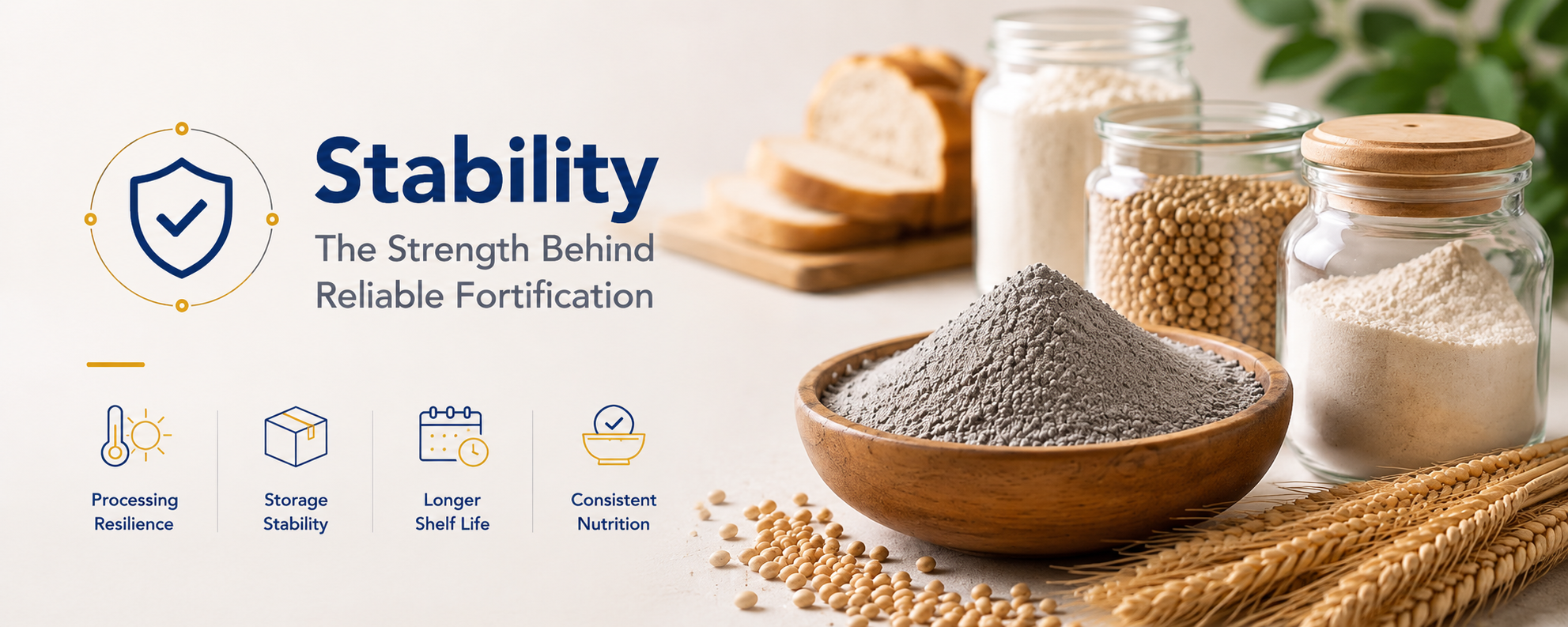
Understanding Ingredient Stability in Food Fortification Applications   ???? Introduction Stability is one of the most important technical considerations in food fortification systems. Fortified food products are expected to maintain nutritional consistency, product quality, and formulation performance throughout processing, transportation, storage, and shelf life. For this reason, ingredient stability plays

Read More »

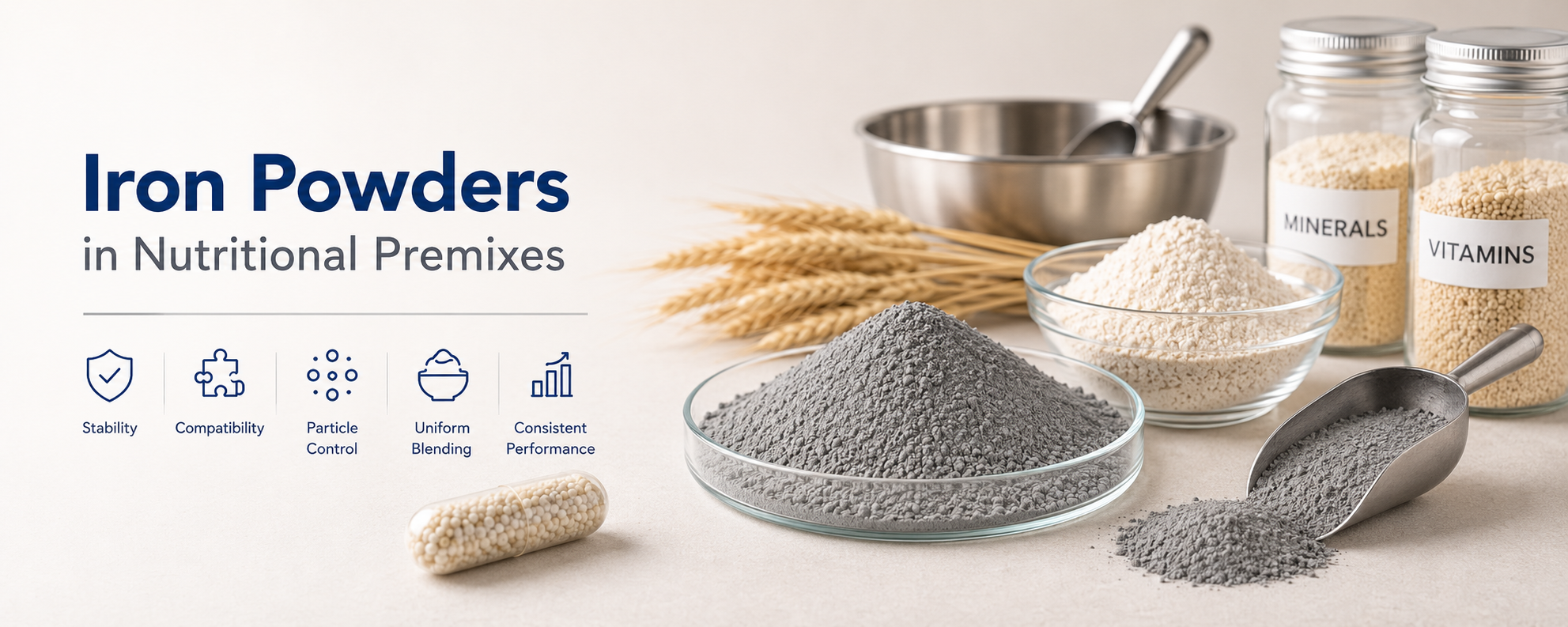
Understanding the Role of Iron Ingredients in Premix Systems   ???? Introduction Nutritional premixes are carefully formulated blends of vitamins, minerals, and functional ingredients designed for use in fortified foods, beverages, dietary supplements, and nutrition-focused products. Iron is one of the most widely used micronutrients in premix systems due to

Read More »

Understanding Taste, Color & Stability in Fortified Food Systems   ???? Introduction Sensory performance is an important consideration in food fortification systems. In fortified foods, ingredient selection must support not only nutritional objectives, but also product quality, appearance, taste, texture, and consumer acceptance. Iron ingredients may behave differently within food

Read More »

Understanding Iron Powders Used in Food Fortification Applications   ???? Introduction Food-grade iron powders are specialized iron ingredients manufactured for use in food fortification, nutritional premixes, and nutrition-focused applications. These materials are developed to support: Nutritional consistency  Food safety requirements  Stability in food systems  Controlled formulation performance  Compatibility with fortified

Read More »

Why Consistency Matters in Fortified Food Systems   ???? Introduction Ingredient consistency is one of the most important foundations of reliable food fortification systems. In large-scale fortified food applications, ingredients are expected to deliver stable performance across: Manufacturing operations  Premix systems  Food processing environments  Storage conditions  Long-term production cycles  Variations

Read More »