Understanding the Manufacturing Process, Purity, and Material Characteristics
???? Introduction
Electrolytic iron powder is a high-purity form of iron produced through an electrochemical refining process known as electrolytic refinement.
Unlike conventional ore-based reduction methods, electrolytic refinement separates iron from impurities at a fundamental level, resulting in iron powder with controlled chemistry, stable composition, and predictable material behavior.
Because of these characteristics, electrolytic iron powder is widely used in applications where purity, consistency, and process control are important.
???? What is Electrolytic Refinement?
Electrolytic refinement is a purification-driven manufacturing process based on electrochemical deposition.
In this process:
- Iron is dissolved from a purified iron anode
- Iron ions move through an electrolytic solution
- Refined iron is deposited onto cathodes
- The deposited iron is further processed into powder form through controlled downstream operations
This process enables controlled separation of iron from impurities and allows tighter management of material quality compared to many conventional production routes.
???? Why Manufacturing Route Matters
The behavior of iron powder is strongly influenced by how the material is produced.
Different manufacturing routes can affect:
- Purity
- Impurity profile
- Surface characteristics
- Stability
- Particle behavior
- Batch consistency
Electrolytic refinement focuses on purification first, helping establish a more controlled and consistent iron base.
???? Key Characteristics of Electrolytic Iron Powder
Electrolytically refined iron powder typically offers:
- High and consistent iron purity
- Controlled impurity profile
- Low and controlled acid-insoluble parameters
- Stable chemical composition across batches
- Predictable material behavior
These characteristics are achieved through controlled refining and manufacturing processes rather than appearance-based selection.
???? Importance of Purity and Impurity Control
In many technical applications, impurity management plays an important role in performance and consistency.
Electrolytic refinement helps support:
- Tight control of safety-critical heavy metals
- Reduced variability across production batches
- More stable iron chemistry
Controlled impurity profiles are especially important in applications requiring:
- Stable processing behavior
- Predictable formulation performance
- Reliable long-term consistency
???? Surface Characteristics and Material Behavior
The surface condition of iron powder influences:
- Reactivity
- Oxidation behavior
- Stability
- Interaction with surrounding materials
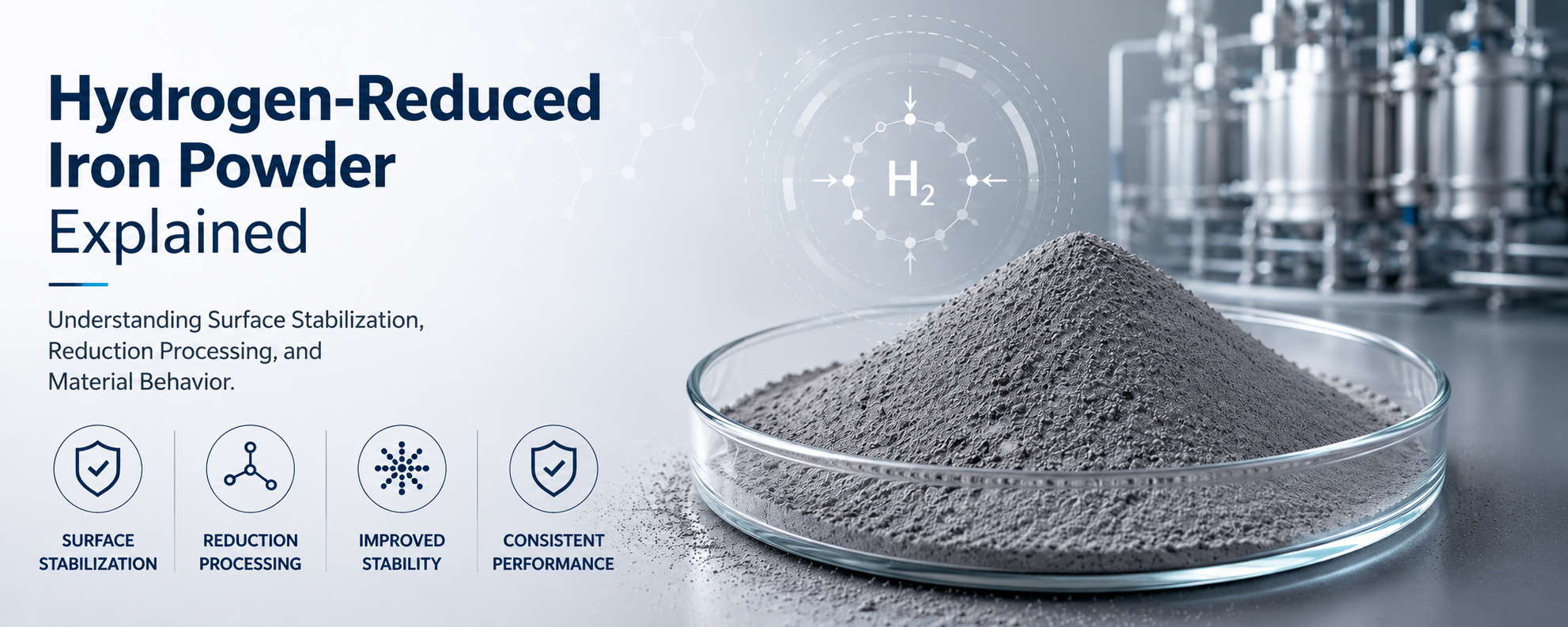
Electrolytically refined iron powder provides a controlled iron base that may also undergo additional downstream processing, including hydrogen reduction where enhanced surface stability is required.
???? Typical Uses of Electrolytic Iron Powder
Electrolytic iron powder is widely used in:
Food & Nutrition
- Food fortification
- Nutritional premixes
- Dietary supplements
Chemical & Industrial Processes
- Iron salt manufacturing
- Specialty chemical synthesis
- Laboratory applications
- Controlled industrial systems
Application suitability depends on process conditions, formulation design, and technical requirements.
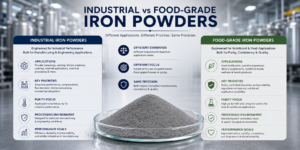
???? Electrolytic Iron Powder vs Conventional Reduction Processes
Iron powders produced through different manufacturing methods may appear visually similar but behave differently in practical applications.
Important differences can exist in:
- Refinement depth
- Impurity control
- Surface condition
- Stability characteristics
- Batch consistency
Electrolytic refinement emphasizes controlled purification and process consistency throughout manufacturing.
???? Common Misconception
❌ “All iron powders perform similarly if iron percentage is high.”
✅ In reality:
Iron powder performance depends on multiple factors, including:
- Manufacturing route
- Impurity profile
- Surface characteristics
- Particle distribution
- Process consistency
Iron percentage alone does not fully define material behavior or performance.
???? Serena Nutrition Perspective
At Serena Nutrition, electrolytic refinement forms the foundation of our manufacturing approach.
We focus on:
- Controlled purification
- Consistent manufacturing processes
- Stable impurity profiles
- Batch-to-batch consistency
- Long-term material reliability
Our manufacturing philosophy is based on process discipline, refinement control, and consistent product performance.
???? Key Takeaways
- Electrolytic iron powder is produced through electrochemical refinement
- Manufacturing route strongly influences material behavior
- Purity and impurity control are critical for consistency
- Surface characteristics impact stability and performance
- Process discipline supports predictable long-term behavior
- Electrolytic refinement enables controlled and consistent iron powder production