Understanding Iron Powders Used in Chemical & Industrial Applications
???? Introduction
Industrial iron powders are specialized iron materials used across a wide range of manufacturing, engineering, chemical, and process-oriented applications.
Unlike finished metal components, iron powders are engineered particulate materials designed to support:
- Controlled processing behavior
- Thermal integration
- Structural manufacturing
- Surface engineering
- Industrial formulation systems
- Precision manufacturing applications
Industrial iron powders are widely used in:
- Powder metallurgy
- Welding systems
- Friction materials
- Surface coatings
- Metal pastes
- Chemical processing systems
- Thermal applications
- Emerging energy technologies
Their performance depends not only on iron content, but also on:
- Particle characteristics
- Surface condition
- Purity profile
- Compressibility
- Flow behavior
- Manufacturing consistency
???? What Are Iron Powders?
Iron powders are finely divided iron particles manufactured through controlled production and refinement processes.
These powders may vary in:
- Particle size
- Morphology
- Surface structure
- Density characteristics
- Purity levels
- Processing behavior
Different manufacturing methods produce different powder characteristics, which may influence performance across industrial applications.
Industrial iron powders are therefore selected based on application-specific technical requirements rather than appearance alone.
???? Common Manufacturing Methods
Industrial iron powders may be produced through several manufacturing routes, including:
- Electrolytic refinement
- Hydrogen reduction
- Atomization systems
- Mechanical processing methods
The manufacturing route may influence:
- Particle structure
- Surface characteristics
- Compressibility
- Purity profile
- Stability behavior
- Industrial processing performance
Controlled manufacturing systems help support more reproducible material behavior.
???? Why Industrial Iron Powders Matter
Iron powders play important roles in modern manufacturing systems because they support:
- Precision component manufacturing
- Controlled thermal processing
- Efficient material utilization
- Industrial formulation flexibility
- Scalable manufacturing systems
Industrial powder systems are often preferred in applications requiring:
- Complex part geometry
- Controlled density behavior
- Precision material integration
- High-volume production consistency
As industrial technologies continue evolving, engineered powder systems are becoming increasingly important.
???? Major Industrial Applications
Industrial iron powders are commonly used in:
Powder Metallurgy
Used in compacted and sintered component manufacturing systems.
Welding Applications
Used in welding consumables, thermal systems, and process integration materials.
Friction Materials
Used in brake systems, wear materials, and industrial composite systems.
Surface Coatings & Metal Pastes
Used in coating technologies and engineered surface applications.
Chemical Processing Systems
Used in catalytic, reactive, and industrial process-oriented applications.
Thermal & Industrial Systems
Used in applications involving heat processing and material integration systems.
Emerging Energy Technologies
Used in advanced material systems and battery-related technologies.
???? Importance of Particle Characteristics
Particle behavior is one of the most important factors influencing industrial iron powder performance.
Particle characteristics may influence:
- Flow behavior
- Packing density
- Compressibility
- Surface interaction
- Thermal processing behavior
- Manufacturing consistency
Controlled particle engineering helps support:
- More predictable processing
- Improved industrial reproducibility
- Stable formulation performance
- Reliable long-term material behavior
???? Surface Stability and Oxidation Behavior
Iron powder surfaces naturally interact with oxygen and environmental conditions.
Surface condition may influence:
- Oxidation behavior
- Storage stability
- Reactivity
- Thermal performance
- Long-term material consistency
Controlled manufacturing and stabilization systems help support:
- Reduced variability
- More stable surface characteristics
- Improved storage behavior
- Reliable industrial processing performance
???? Manufacturing Consistency in Industrial Applications
Industrial applications often require materials capable of maintaining:
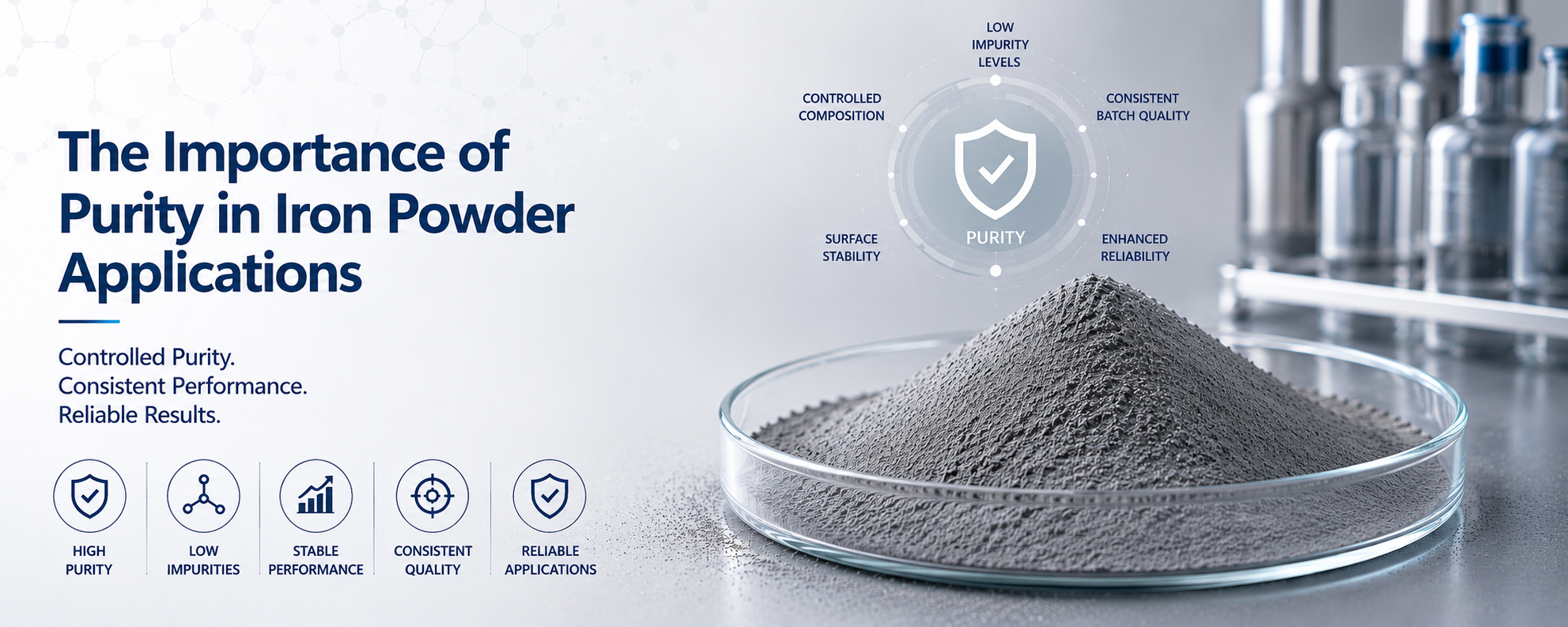
- Stable batch quality
- Controlled impurity profiles
- Consistent particle behavior
- Reliable processing characteristics
- Long-term reproducibility
Manufacturing discipline and process control are therefore important foundations of dependable industrial iron powder systems.
???? Why Appearance Alone is Misleading
Iron powders with similar appearance may still differ significantly in:
- Particle structure
- Surface characteristics
- Purity profile
- Compressibility
- Industrial processing behavior
- Stability performance
Material performance depends more on manufacturing quality and particle engineering than visual appearance alone.
???? Serena Nutrition Perspective
At Serena Nutrition, we manufacture high-purity iron powders designed for nutritional, specialty, and industrial applications.
Our approach emphasizes:
- Controlled manufacturing systems
- Stable particle characteristics
- Controlled impurity management
- Reliable industrial performance
- Process-oriented quality systems
- Long-term manufacturing consistency
We believe manufacturing precision, particle engineering, and process discipline are important foundations of dependable industrial iron powder systems.
???? Key Takeaways
- Industrial iron powders are used across multiple manufacturing and engineering systems
- Particle characteristics strongly influence industrial processing behavior
- Manufacturing route affects purity, stability, and material performance
- Surface stability influences storage behavior and industrial reliability
- Powder systems support precision manufacturing and scalable production
- Industrial applications increasingly depend on engineered powder systems
- Controlled manufacturing supports dependable industrial material performance