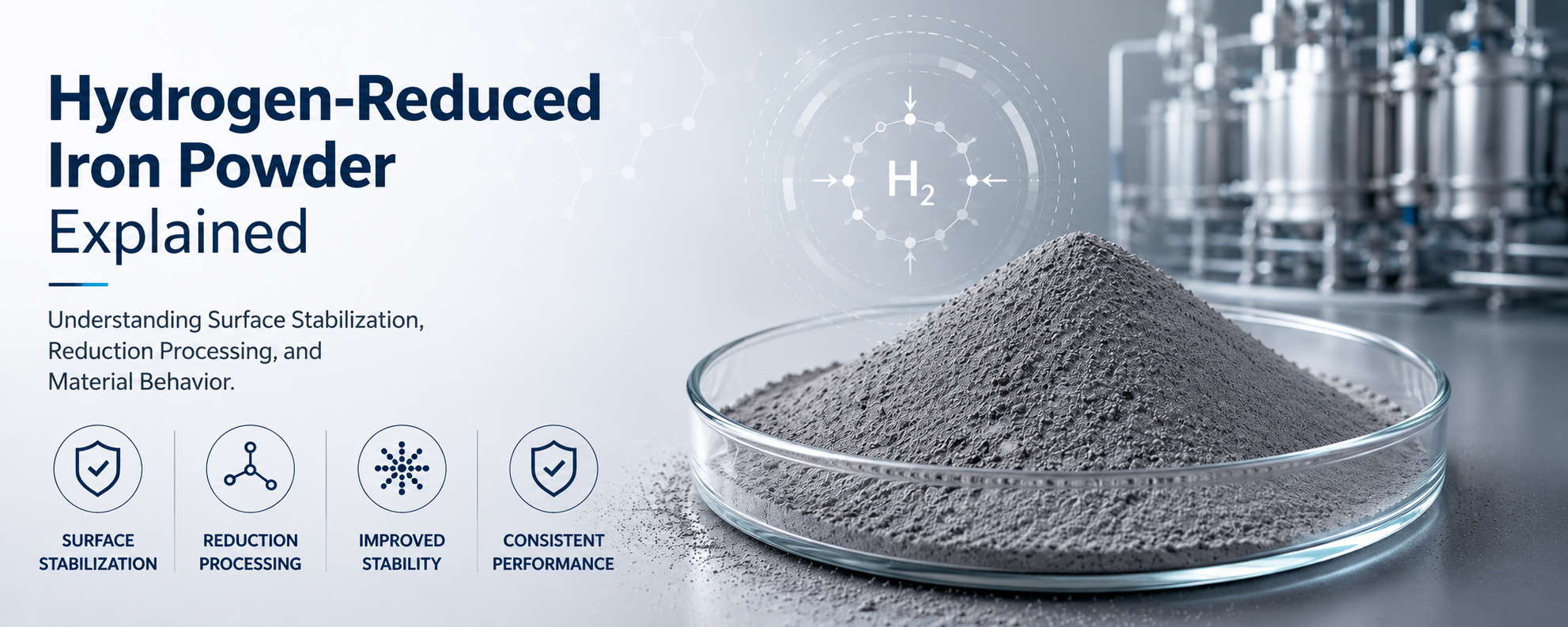
Understanding How Surface Characteristics Influence Stability, Reactivity, and Performance
???? Introduction
The surface condition of iron powder plays a major role in determining how the material behaves during storage, processing, and application.
Even when iron powders have similar composition, differences in surface characteristics can influence:
- Reactivity
- Oxidation behaviour
- Stability
- Processing consistency
- Interaction with surrounding materials
For this reason, surface condition is an important consideration in controlled iron powder manufacturing.
???? What is Surface Condition?
Surface condition refers to the physical and chemical characteristics present on the outer layer of iron powder particles.
These characteristics may include:
- Surface oxide layers
- Surface roughness
- Residual compounds
- Structural irregularities
- Oxygen-related surface characteristics
The manufacturing route and downstream processing strongly influence these surface properties.
???? Why Surface Characteristics Matter
The surface of iron powder is the first area that interacts with surrounding environments and process systems.
Surface condition can influence:
- Oxidation tendency
- Moisture interaction
- Stability during storage
- Material reactivity
- Processing behaviour
Controlled surface characteristics help support more predictable and stable material performance.
???? Surface Oxides and Material Behaviour
Iron naturally forms thin oxide layers when exposed to air and moisture.
The extent and nature of these surface oxides may influence:
- Surface reactivity
- Oxygen-related behaviour
- Storage stability
- Long-term consistency
Controlled processing and refinement help support more stable surface conditions.
???? Manufacturing Route and Surface Characteristics
Different manufacturing routes create different surface structures and behaviours.
Manufacturing factors influencing surface condition include:
- Refinement process
- Thermal processing
- Reduction conditions
- Mechanical powder processing
- Downstream stabilization steps
Controlled manufacturing systems help establish more uniform and reproducible surface characteristics.
???? Surface Condition and Stability
Stable surface characteristics contribute to:
- Reduced variability during storage
- More predictable oxidation behavior
- Improved consistency across batches
- Better long-term material reliability
Surface stabilization processes may further improve consistency in applications sensitive to oxidation and reactivity.
???? Surface Characteristics and Processing Behaviour
Surface condition may influence how iron powder behaves during:
- Blending
- Formulation
- Compression
- Chemical reactions
- Industrial processing
More controlled surface systems help support reproducible material behaviour across different processing environments.
???? Why Appearance Alone is Not Enough
Iron powders with similar visual appearance may still behave differently because of differences in:
- Surface chemistry
- Oxide distribution
- Structural condition
- Oxygen-related parameters
- Manufacturing consistency
Surface behaviour is determined more by manufacturing and processing conditions than by appearance alone.
???? Controlled Surface Stabilization
Certain downstream processing methods may be used to improve surface stability and uniformity.
These controlled stabilization processes can help:
- Reduce residual surface oxides
- Improve surface consistency
- Enhance storage stability
- Support predictable long-term behaviour
The effectiveness of stabilization depends on both processing method and starting material quality.
???? Serena Nutrition Perspective
At Serena Nutrition, surface condition is managed through controlled refinement, downstream processing, and consistency-focused manufacturing systems.
Our approach emphasizes:
- Controlled manufacturing routes
- Stable surface characteristics
- Consistent processing conditions
- Surface stabilization where required
- Batch-to-batch reliability
We believe controlled surface behaviour is essential for predictable and reliable iron powder performance.
???? Key Takeaways
- Surface condition strongly influences iron powder behaviour
- Oxide layers affect stability and reactivity
- Manufacturing route impacts surface characteristics
- Controlled processing supports more stable surface systems
- Appearance alone does not define material behaviour
- Surface stability contributes to long-term consistency and reliability