Understanding Sintering, Compaction & Structural Manufacturing Applications
???? Introduction
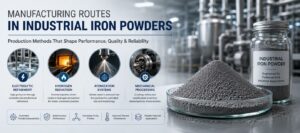
Powder metallurgy is one of the most important industrial applications of iron powder technology.
This manufacturing approach uses engineered metal powders to produce structural and mechanical components through:
- Compaction
- Thermal processing
- Sintering integration
- Controlled density formation
Iron powders are widely used in powder metallurgy because they support:
- Precision manufacturing
- Material efficiency
- Structural consistency
- Scalable production systems
- Complex component formation
Modern powder metallurgy systems are used across:
- Automotive manufacturing
- Industrial machinery
- Mechanical engineering systems
- Structural component manufacturing
- Thermal and wear-resistant applications
The performance of powder metallurgy systems depends heavily on:
- Particle characteristics
- Compressibility
- Flow behavior
- Surface stability
- Thermal processing response
- Manufacturing consistency
???? What is Powder Metallurgy?
Powder metallurgy is a manufacturing process in which metal powders are:
- Blended or prepared
- Compacted into desired shapes
- Thermally processed under controlled conditions
- Sintered to create structural components
Unlike conventional casting or machining systems, powder metallurgy allows:
- Controlled material utilization
- Precision structural design
- Reduced material waste
- Consistent high-volume manufacturing
Iron powder systems play a major role in this manufacturing technology.
???? Why Iron Powders Are Used in Powder Metallurgy
Iron powders are widely used because they provide:
- Good compressibility
- Structural adaptability
- Thermal process compatibility
- Controlled particle behavior
- Manufacturing flexibility
These characteristics support:
- Uniform compaction
- Stable sintering behavior
- Reliable component formation
- Reproducible manufacturing performance
Different powder metallurgy systems may require different iron powder characteristics depending on engineering and structural requirements.
???? Importance of Particle Characteristics
Particle engineering is one of the most important factors in powder metallurgy performance.
Particle characteristics may influence:
- Compaction efficiency
- Packing density
- Structural uniformity
- Flow behavior
- Thermal integration
- Sintering consistency
Controlled particle systems help support:
- More stable manufacturing conditions
- Improved structural consistency
- Reliable industrial reproducibility
- Better component performance
Particle morphology and size distribution therefore play important roles in powder metallurgy systems.
???? Compressibility in Powder Metallurgy
Compressibility refers to how efficiently powder particles compact under pressure.
Controlled compressibility helps support:
- Uniform density distribution
- Stable component formation
- Structural consistency
- Improved manufacturing reproducibility
Compressibility performance may be influenced by:
- Particle shape
- Surface texture
- Particle density
- Size distribution
- Manufacturing route
Reliable compaction behavior is important in precision component manufacturing systems.
???? Flow Behavior and Manufacturing Efficiency
Flow characteristics influence how powders behave during:
- Feeding operations
- Die filling
- Blending systems
- Automated manufacturing environments
Stable flow behavior helps support:
- Consistent production conditions
- Reduced variability
- Improved manufacturing efficiency
- Reliable process integration
Controlled particle engineering contributes significantly to stable industrial processing performance.
???? Sintering and Thermal Integration
Sintering is the controlled thermal process used to bond compacted powder particles into solid structural components.
During sintering:
- Particle bonding occurs
- Structural integration develops
- Density characteristics stabilize
- Mechanical properties evolve
Sintering behavior may be influenced by:
- Particle structure
- Surface condition
- Thermal stability
- Compressibility characteristics
- Controlled processing conditions
Stable sintering performance is important for reliable structural component manufacturing.
???? Surface Stability and Oxidation Control
Surface condition influences:
- Thermal processing behavior
- Sintering integration
- Structural consistency
- Oxidation response
- Long-term material reliability
Controlled manufacturing and stabilization systems help support:
- Reduced oxidation variability
- Improved surface consistency
- Stable thermal performance
- Reliable industrial integration
Surface engineering therefore plays an important role in powder metallurgy systems.
???? Manufacturing Consistency in Powder Metallurgy
Powder metallurgy applications often require:
- Stable particle systems
- Controlled impurity profiles
- Reliable compressibility
- Consistent flow behavior
- Reproducible thermal performance
Controlled manufacturing environments help support:
- Better batch consistency
- Reduced process variability
- Stable industrial reproducibility
- Reliable component quality
Manufacturing discipline is therefore important in dependable powder metallurgy systems.
???? Evolving Powder Metallurgy Technologies
Modern powder metallurgy continues evolving toward:
- Precision manufacturing systems
- Advanced particle engineering
- Improved thermal processing control
- Cleaner manufacturing technologies
- More complex structural applications
As industrial systems become increasingly advanced, demand for:
- Stable powder systems
- Controlled manufacturing quality
- Reliable process integration
- Precision particle behavior
is expected to continue increasing.
???? Serena Nutrition Perspective
At Serena Nutrition, we manufacture high-purity iron powders designed for specialty, industrial, and process-oriented applications.
Our approach emphasizes:
- Controlled particle characteristics
- Stable manufacturing systems
- Surface consistency
- Controlled impurity management
- Reliable industrial performance
- Long-term manufacturing reproducibility
We believe particle engineering, process control, and manufacturing consistency are important foundations of dependable powder metallurgy systems.
???? Key Takeaways
- Powder metallurgy is one of the most important applications of iron powder technology
- Particle characteristics strongly influence compaction and sintering behavior
- Compressibility affects structural consistency and manufacturing performance
- Flow behavior influences industrial efficiency and process stability
- Surface stability affects thermal integration and oxidation behavior
- Manufacturing consistency supports reliable structural component production
- Precision powder systems are becoming increasingly important in advanced industrial manufacturing