Understanding Surface Stabilization, Reduction Processing, and Material Behavior
???? Introduction
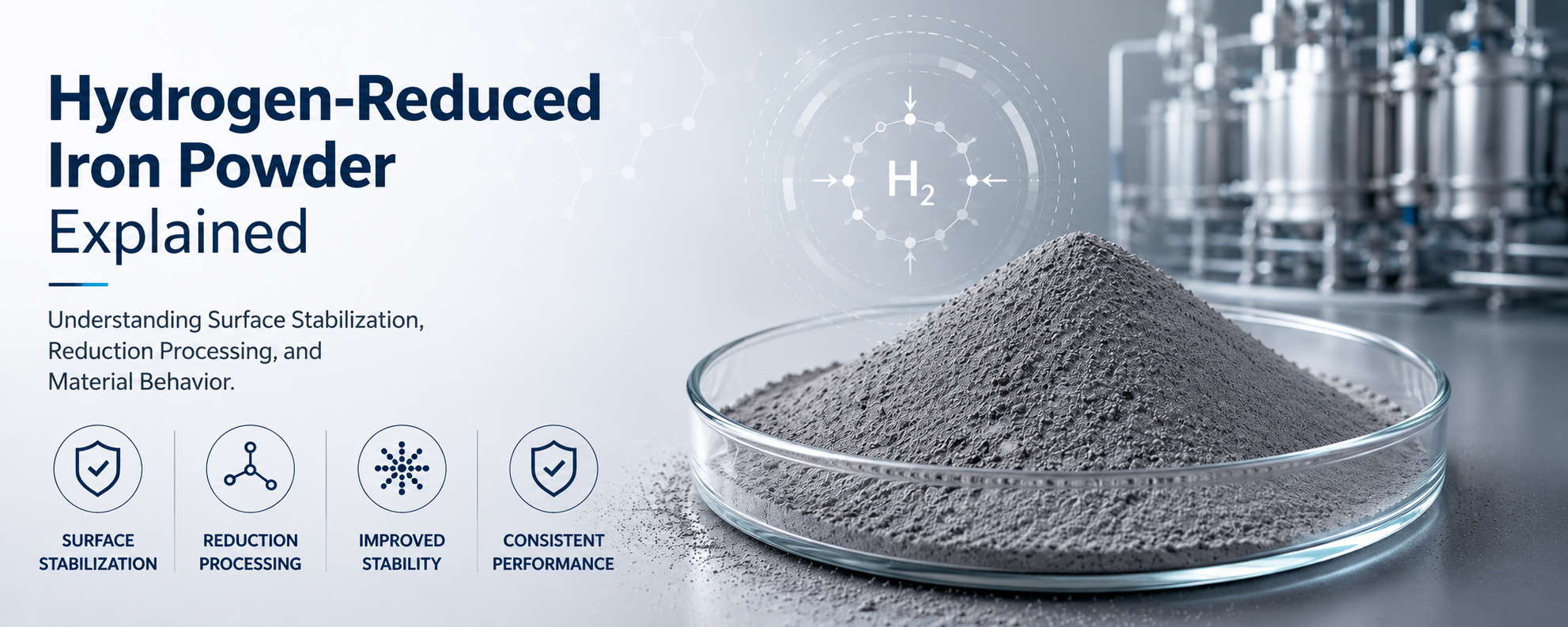
Hydrogen-reduced iron powder is produced by applying a controlled hydrogen reduction process to refined iron powder under elevated temperature conditions.
This process is used to improve surface condition, reduce residual surface oxides, and enhance material stability and consistency.
Hydrogen reduction is not simply a visual modification process. It influences surface chemistry, structural condition, and long-term material behavior.
???? What is Hydrogen Reduction?
Hydrogen reduction is a controlled thermal process in which iron powder is exposed to a hydrogen atmosphere at elevated temperatures.
During this process:
- Residual surface oxides are reduced
- Surface chemistry becomes more uniform
- Oxygen-related parameters may be lowered
- Particle structure becomes more stabilized
The process is carefully controlled to maintain consistency and material reliability.
???? Why Hydrogen Reduction is Used
Iron particles naturally develop thin oxide layers during manufacturing and handling.
Hydrogen reduction helps:
- Reduce residual surface oxides
- Improve surface uniformity
- Enhance storage stability
- Support more predictable material behavior
This treatment is often used when tighter surface control and enhanced stability are required.
???? Surface Characteristics and Stability
The surface condition of iron powder strongly influences:
- Oxidation behavior
- Storage stability
- Reactivity
- Process consistency
Hydrogen reduction helps establish a cleaner and more stable surface condition, supporting more controlled long-term behavior.
???? Stress Relief and Structural Stabilization
Mechanical powder processing steps such as crushing, milling, and pulverization can introduce internal stresses into iron particles.
Exposure to elevated temperatures during hydrogen reduction supports:
- Relaxation of mechanically induced stresses
- Structural stabilization
- Reduction of internal irregularities
This contributes to improved consistency and more stable material behavior across batches.
???? Influence on Oxygen-Related Parameters
Oxygen-related characteristics can influence:
- Surface reactivity
- Oxidation tendency
- Stability during storage
- Process performance
Controlled hydrogen reduction helps reduce residual oxygen-containing surface compounds and establish more consistent surface behavior.
???? Hydrogen Reduction vs Ore-Based Direct Reduction
Although both involve reduction processes, manufacturing route and starting material are fundamentally different.
Hydrogen reduction applied to refined iron powder focuses on:
- Surface stabilization
- Controlled post-processing
- Consistency enhancement
whereas ore-based reduction methods are primarily focused on reduction of iron ore itself.
The starting material and refinement depth strongly influence the final characteristics of the powder.
???? Why Appearance Alone Can Be Misleading
Hydrogen-reduced iron powder may appear visually similar to other iron powders.
However, visual appearance alone does not fully indicate:
- Surface condition
- Refinement depth
- Oxygen-related characteristics
- Stability behavior
- Process consistency
Material behavior is determined more by manufacturing and processing conditions than by appearance alone.
???? Typical Technical Considerations
Hydrogen-reduced iron powder is often evaluated based on:
- Iron purity
- Oxygen-related parameters
- Surface stability
- Impurity profile
- Batch consistency
- Particle characteristics
These factors influence long-term material behavior and process reliability.
???? Serena Nutrition Perspective
At Serena Nutrition, hydrogen reduction is used as a controlled post-refinement process applied to electrolytically refined iron powder.
Our approach focuses on:
- Controlled reduction conditions
- Stable surface characteristics
- Consistent processing
- Batch-to-batch reliability
- Long-term material stability
We view hydrogen reduction as a refinement and stabilization step designed to support predictable material behavior.
???? Key Takeaways
- Hydrogen reduction is a controlled thermal stabilization process
- Surface condition strongly influences material behavior
- Reduction processing helps improve surface uniformity and stability
- Stress relief contributes to structural consistency
- Oxygen-related parameters influence long-term performance
- Manufacturing route and starting material remain critically important