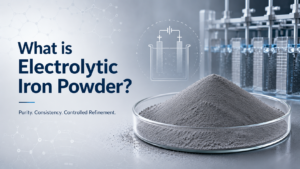
Advancing Manufacturing Precision, Particle Engineering & Material Innovation
???? Introduction
Iron powder technology continues to evolve as manufacturing systems, material engineering, and industrial applications become increasingly advanced.
Modern iron powder systems are expected to support:
- Stable material performance
- Consistent particle characteristics
- Reliable manufacturing behavior
- Controlled surface properties
- Long-term storage stability
- Process-oriented quality systems
As industrial and technical applications continue to expand, the future of iron powder technology is becoming increasingly connected to:
- Precision manufacturing
- Advanced particle engineering
- Surface stabilization systems
- Cleaner refinement technologies
- Controlled impurity management
- Sustainable manufacturing practices
Iron powders are now widely used across:
- Nutritional systems
- Food fortification applications
- Powder metallurgy
- Battery-related technologies
- Chemical processing systems
- Welding applications
- Friction materials
- Specialty industrial formulations
The future of iron powder technology is therefore closely connected to both manufacturing science and application-focused innovation.
???? Evolution of Manufacturing Systems
Modern iron powder manufacturing is moving toward:
- Higher process precision
- Improved refinement systems
- Stable particle engineering
- Better impurity control
- Reproducible surface characteristics
- More consistent batch quality
Manufacturing quality is increasingly evaluated not only by composition, but also by:
- Process consistency
- Structural stability
- Surface uniformity
- Oxygen-related characteristics
- Long-term reproducibility
Controlled manufacturing systems help support more dependable material performance across technical applications.
???? Advanced Particle Engineering
Particle engineering is becoming one of the most important areas in modern iron powder technology.
Controlled particle systems may influence:
- Flow behavior
- Compressibility
- Blending performance
- Surface interaction
- Manufacturing efficiency
- Processing reproducibility
Future developments are expected to increasingly focus on:
- Narrow particle size distribution
- Engineered particle morphology
- Controlled surface area
- Improved structural consistency
- Application-specific particle systems
Particle precision will continue playing a major role in next-generation material performance.
???? Surface Stabilization & Oxygen Control
Surface condition is closely connected to:
- Stability behavior
- Environmental interaction
- Storage consistency
- Long-term material reliability
Future manufacturing systems are expected to place greater emphasis on:
- Controlled surface stabilization
- Reduced oxidation variability
- Oxygen-related process control
- Improved protective packaging systems
- Stable long-term storage performance
Controlled surface engineering helps support more predictable and reproducible iron powder behavior.
???? Cleaner Refinement Technologies
Refinement systems continue evolving toward:
- Higher purity levels
- Better impurity management
- Reduced residual contaminants
- Improved process efficiency
- Stable material consistency
Purification-focused manufacturing systems help support:
- Cleaner surface characteristics
- Controlled impurity profiles
- Better process reproducibility
- More reliable technical performance
Future iron powder systems are expected to increasingly emphasize controlled refinement and precision manufacturing.
???? Expansion of Industrial Applications
Iron powder applications continue expanding into:
- Powder metallurgy systems
- Battery-related technologies
- Thermal process systems
- Chemical processing applications
- Surface engineering systems
- Industrial additive systems
- Specialty material environments
As technical industries evolve, application requirements are becoming increasingly specialized and process-sensitive.
This trend is expected to drive demand for:
- More consistent powder systems
- Application-specific particle engineering
- Improved manufacturing reproducibility
- Stable long-term performance
???? Sustainability & Manufacturing Efficiency
Future manufacturing systems are also expected to focus more strongly on:
- Process efficiency
- Resource optimization
- Energy-conscious manufacturing
- Waste reduction
- Sustainable operational systems
Industrial manufacturing increasingly values:
- Long-term process stability
- Controlled material utilization
- Cleaner production systems
- Reliable quality management
Sustainability and manufacturing discipline are expected to become increasingly connected in future material production systems.
???? Data-Driven Manufacturing & Quality Systems
Advanced manufacturing technologies are increasingly integrating:
- Process monitoring systems
- Data-driven quality control
- Automated consistency tracking
- Precision process management
- Reproducibility-focused manufacturing systems
These systems help support:
- Reduced process variability
- Stable batch quality
- Better long-term consistency
- Reliable material performance
Digital manufacturing integration is expected to play a growing role in future iron powder production environments.
???? The Future of High-Purity Iron Powders
Future iron powder systems will likely continue emphasizing:
- Controlled impurity profiles
- Surface stabilization
- Precision particle engineering
- Manufacturing reproducibility
- Long-term storage consistency
- Application-focused material optimization
As industrial and technical applications become increasingly advanced, manufacturing discipline and process control will remain important foundations of dependable iron powder technology.
???? Serena Nutrition Perspective
At Serena Nutrition, we focus on manufacturing high-purity iron powders through controlled process systems designed for nutritional, specialty, and industrial applications.
Our approach emphasizes:
- Controlled manufacturing environments
- Stable particle characteristics
- Reliable surface consistency
- Controlled impurity management
- Long-term manufacturing reproducibility
- Process-oriented quality systems
We believe precision manufacturing, particle engineering, and process discipline are important foundations of future iron powder technology.
???? Key Takeaways
- Iron powder technology is evolving toward greater precision and process consistency
- Particle engineering continues influencing material and industrial performance
- Surface stabilization and oxygen control support long-term reliability
- Cleaner refinement technologies improve purity and manufacturing consistency
- Industrial applications for iron powders continue expanding across technical sectors
- Sustainability and process efficiency are becoming increasingly important
- Controlled manufacturing systems support dependable future material performance