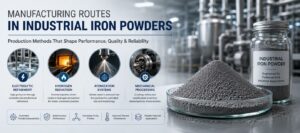
Understanding Advanced Manufacturing, Precision Engineering & Emerging Industrial Applications
???? Introduction
Industrial iron powder technologies are continuing to evolve as manufacturing systems become increasingly advanced, process-oriented, and precision-driven.
Modern industries increasingly require powder materials capable of supporting:
- Stable manufacturing integration
- Controlled particle engineering
- Reliable thermal performance
- Surface consistency
- Long-term process reproducibility
- Advanced industrial applications
As industrial technologies continue progressing, iron powder systems are being explored across:
- Powder metallurgy
- Thermal manufacturing systems
- Surface engineering technologies
- Friction and wear applications
- Chemical processing systems
- Energy-related industrial technologies
- Advanced composite manufacturing
Future industrial development is expected to place greater emphasis on:
- Precision manufacturing
- Controlled impurity management
- Surface stabilization systems
- Sustainable production technologies
- Process-oriented engineering environments
???? Evolution of Industrial Powder Technologies
Industrial manufacturing is evolving toward:
- Higher process precision
- Improved manufacturing reproducibility
- Stable operational integration
- Reduced variability
- Better material efficiency
These developments are increasing demand for powder systems capable of maintaining:
- Stable particle characteristics
- Controlled surface behavior
- Reliable thermal integration
- Long-term manufacturing consistency
Modern industrial systems increasingly depend on engineered materials designed for predictable and reproducible process performance.
???? Advanced Particle Engineering
Particle engineering is expected to remain one of the most important areas in future industrial powder manufacturing.
Future developments may increasingly focus on:
- Narrow particle size distribution
- Controlled morphology
- Surface optimization
- Precision flow behavior
- Reliable compressibility systems
Advanced particle systems may help support:
- Stable industrial processing
- Improved structural consistency
- Reliable thermal integration
- Enhanced manufacturing reproducibility
Precision particle engineering is therefore expected to play a major role in future industrial technologies.
???? Surface Engineering & Stability Systems
Future industrial systems are expected to increasingly emphasize:
- Surface stabilization
- Oxidation management
- Environmental consistency
- Long-term storage reliability
Controlled surface systems may help support:
- Reduced industrial variability
- Reliable thermal performance
- Stable environmental interaction
- Consistent manufacturing integration
Surface engineering technologies are therefore expected to become increasingly sophisticated across advanced industrial manufacturing systems.
???? Emerging Energy & Advanced Industrial Applications
Iron powder technologies are increasingly being explored in:
- Advanced industrial manufacturing
- Thermal process systems
- Energy-related technologies
- Specialized industrial composites
- Emerging engineering environments
Future developments may emphasize:
- Stable thermal behavior
- Controlled material interaction
- Reliable process integration
- Long-term industrial reproducibility
As industrial technologies continue evolving, engineered powder systems are expected to play larger roles in advanced manufacturing and material engineering systems.
???? Automation & Precision Manufacturing
Modern industrial systems increasingly integrate:
- Automated manufacturing environments
- Real-time process monitoring
- Precision quality systems
- Controlled production technologies
Future industrial powder manufacturing is expected to increasingly involve:
- Automated consistency management
- Data-driven manufacturing systems
- Precision process engineering
- Advanced quality-control integration
Manufacturing precision is therefore expected to become an even more important competitive advantage in industrial powder technologies.
???? Sustainability & Resource Efficiency
Future industrial manufacturing systems are also expected to increasingly emphasize:
- Material efficiency
- Controlled resource utilization
- Reduced process variability
- Sustainable production technologies
- Long-term operational stability
Powder-based manufacturing systems may help support:
- Precision material usage
- Reduced excess processing
- Improved industrial efficiency
- Stable production integration
Sustainability and process-oriented engineering are therefore becoming increasingly connected in modern industrial manufacturing systems.
???? Controlled Manufacturing & Long-Term Reliability
Future industrial systems will increasingly depend on:
- Controlled impurity management
- Stable particle engineering
- Reliable surface consistency
- Precision thermal behavior
- Long-term manufacturing reproducibility
Controlled manufacturing systems help support:
- Reduced industrial variability
- Stable process integration
- Reliable operational performance
- Consistent industrial quality
Manufacturing discipline therefore remains one of the most important foundations of dependable industrial powder technologies.
???? Evolving Industrial Expectations
As industries continue advancing, demand is expected to increase for:
- Precision-engineered powder systems
- Stable industrial reproducibility
- Reliable process integration
- Controlled manufacturing quality
- Long-term material consistency
Future industrial environments are expected to increasingly prioritize:
- Manufacturing precision
- Surface engineering
- Thermal reliability
- Process-oriented material systems
???? Serena Nutrition Perspective
At Serena Nutrition, we believe the future of industrial iron powder technology lies in:
- Precision particle engineering
- Controlled manufacturing systems
- Reliable surface stabilization
- Stable impurity management
- Process-oriented industrial integration
- Long-term manufacturing reproducibility
Our approach emphasizes:
- High-purity manufacturing systems
- Stable particle characteristics
- Controlled process environments
- Reliable industrial performance
- Continuous technical improvement
We believe manufacturing precision, material consistency, and process discipline will continue shaping the future of advanced industrial iron powder technologies.
???? Key Takeaways
- Industrial iron powder technologies are becoming increasingly precision-oriented and process-sensitive
- Future systems will emphasize particle engineering, surface stability, and manufacturing reproducibility
- Advanced industrial applications increasingly depend on engineered powder systems
- Automation and precision manufacturing are becoming more important in industrial production
- Sustainability and material efficiency are influencing future manufacturing technologies
- Controlled manufacturing systems support dependable long-term industrial reliability
- Precision engineering will continue shaping future industrial iron powder applications