Understanding Iron Powders Used in Food Fortification Applications
???? Introduction
Food-grade iron powders are specialized iron ingredients manufactured for use in food fortification, nutritional premixes, and nutrition-focused applications.
These materials are developed to support:
- Nutritional consistency
- Food safety requirements
- Stability in food systems
- Controlled formulation performance
- Compatibility with fortified food applications
Unlike industrial-grade materials, food-grade iron powders are manufactured under controlled quality systems designed for nutritional and food-related applications.
???? What Are Food Grade Iron Powders?
Food-grade iron powders are refined iron materials produced for incorporation into:
- Fortified foods
- Wheat flour fortification systems
- Nutritional premixes
- Dietary supplement formulations
- Public health nutrition programs
These powders are commonly evaluated for:
- Purity
- Particle characteristics
- Stability behavior
- Food compatibility
- Manufacturing consistency
- Regulatory suitability
Ingredient quality and controlled processing are important in food-grade applications.
???? Why Food Grade Standards Matter
Food fortification systems require ingredients manufactured under controlled conditions to help support:
- Product safety
- Nutritional consistency
- Stable formulation performance
- Reliable processing behavior
- Batch reproducibility
Controlled food-grade manufacturing systems help reduce variability and support dependable ingredient performance across fortified food applications.
???? Importance of Purity
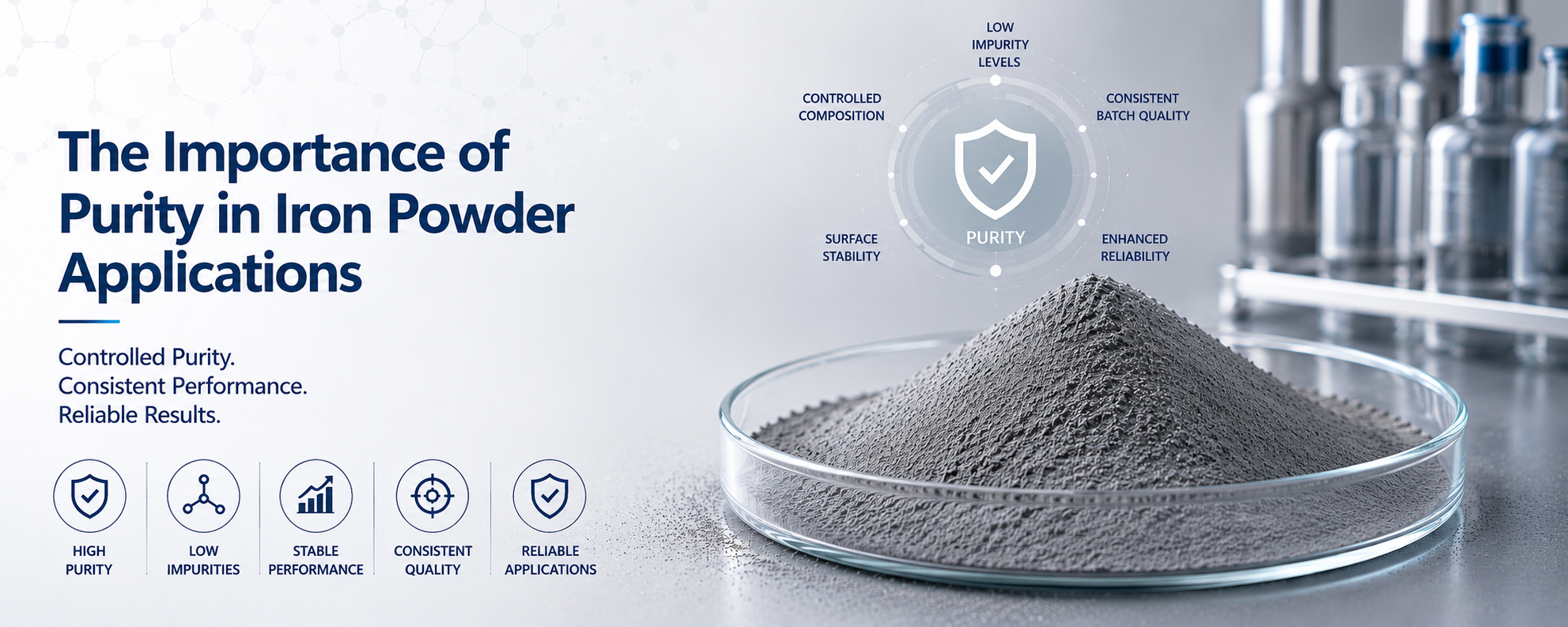
Purity is an important consideration in food-grade iron powders.
Controlled impurity profiles help support:
- Consistent formulation behavior
- Stable processing performance
- Reliable storage characteristics
- Improved compatibility with food systems
Manufacturing route and downstream refinement processes may significantly influence impurity control and material consistency.
???? Role of Particle Characteristics
Particle size and surface characteristics may influence:
- Ingredient dispersion
- Premix compatibility
- Processing consistency
- Sensory behavior
- Storage stability
Controlled particle systems help support more predictable ingredient behavior within fortified food formulations.
???? Stability in Food Systems
Food-grade iron powders used in fortification systems must remain stable during:
- Mixing and blending
- Food processing
- Packaging
- Transportation
- Storage and shelf life
Stable ingredient systems help support:
- Nutritional consistency
- Product quality
- Reliable formulation performance
- Controlled sensory behavior
Ingredient stability is therefore an important part of food fortification applications.
???? Sensory Considerations
Iron ingredients may influence:
- Taste
- Color
- Texture
- Product appearance
Food-grade iron powders designed for nutritional applications are commonly selected to help minimize unwanted sensory impact while maintaining formulation consistency.
Balancing nutritional functionality with sensory stability is an important consideration in food fortification systems.
???? Premix Compatibility
Many food fortification systems use vitamin and mineral premixes before incorporation into final food products.
Food-grade iron powders used in premix systems are often evaluated for:
- Uniform distribution
- Compatibility with micronutrients
- Stability during storage
- Flow behavior
- Long-term formulation consistency
Controlled manufacturing systems help support dependable premix performance.
???? Manufacturing Consistency and Process Control
Reliable fortified food systems require ingredients manufactured under:
- Controlled processing conditions
- Stable quality systems
- Consistent refinement standards
- Reproducible manufacturing procedures
Manufacturing route and process discipline may significantly influence ingredient behavior and long-term formulation reliability.
???? Food Grade Iron Powders in Global Fortification Systems
Food-grade iron powders are widely used in:
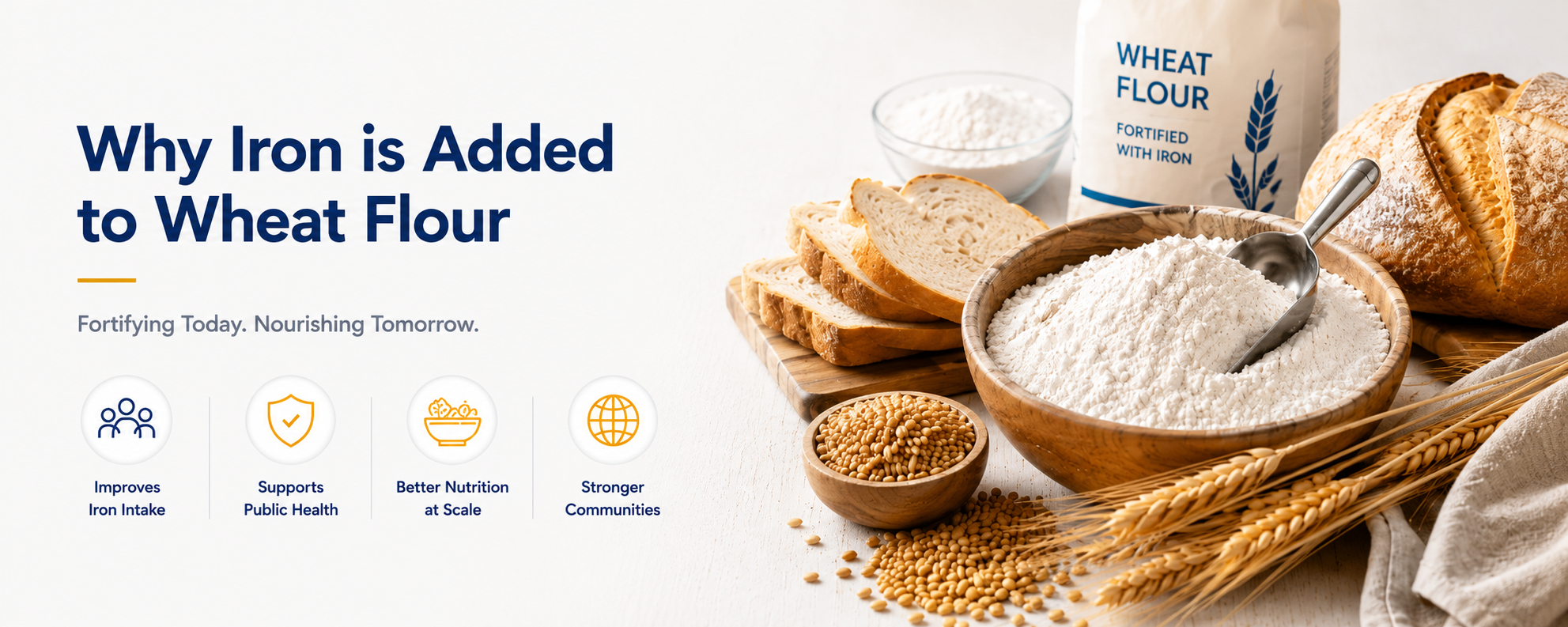
- Wheat flour fortification
- Nutritional premixes
- Fortified cereals
- Nutritional products
- Public health nutrition initiatives
Food manufacturers, premix companies, ingredient suppliers, and nutrition-focused programs all depend on stable and reliable food-grade ingredient systems.
???? Serena Nutrition Perspective
At Serena Nutrition, we manufacture high-purity iron powders designed for food fortification and nutritional applications.
Our approach emphasizes:
- Controlled manufacturing systems
- Stable particle characteristics
- Consistent product quality
- Food-grade process standards
- Reliable formulation performance
We believe ingredient purity, consistency, and process discipline are essential foundations of dependable food-grade iron powder systems.
???? Key Takeaways
- Food-grade iron powders are specialized materials used in nutritional applications
- Controlled manufacturing helps support food safety and formulation consistency
- Purity and particle characteristics influence ingredient behavior
- Stability is important during processing, storage, and shelf life
- Sensory compatibility is an important consideration in fortified foods
- Premix compatibility supports reliable nutrient distribution
- Process control and manufacturing consistency help support dependable fortified food systems